Advertisement
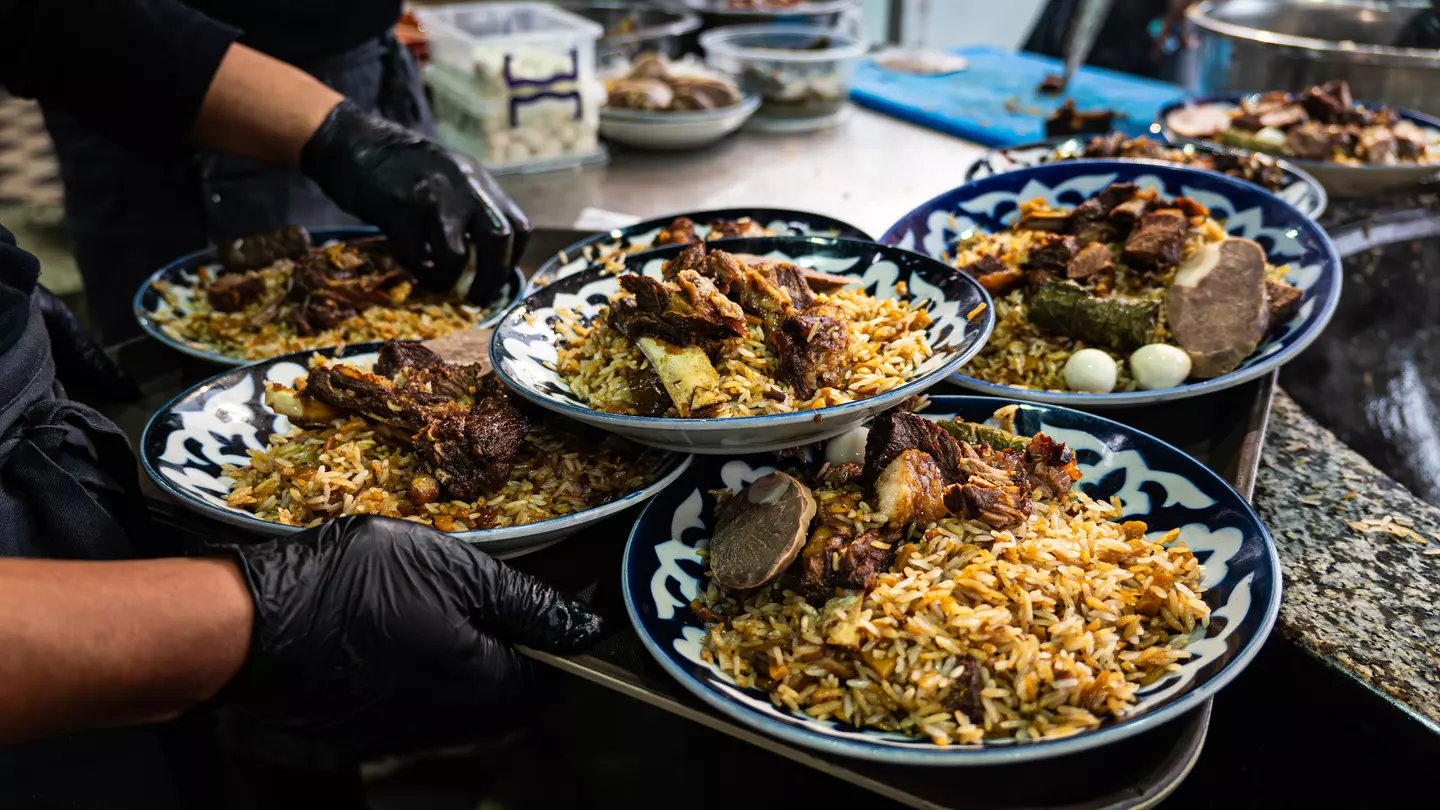
Plov, a dish of rice, vegetables and meat, is Uzbekistan's most beloved dish. Getty Images
Famed for its warm hospitality, Silk Road relics and magnificent blue-tiled mosques and medressas (Islamic academies), Uzbekistan is the most popular gateway to Central Asia. But its rich culinary traditions, influenced by centuries of trade between Europe and Asia along the Silk Road, are less well-known.
Prepare to be surprised by the variety of food on offer in this ancient hub of overland trade. Almost everyone has heard of plov – rice cooked in broth with hunks of meat and fried vegetables – but this Uzbek staple is just the beginning of the food journey.
If you’re lucky enough to be invited into an Uzbek home, you may find yourself sitting down to a full spread of local dishes, placed on a dastarkhan (low dining table) for everyone to share. Alongside plov and flatbreads, you may be served shorpa (meat and vegetable soup), palate-cleansing salads and spice-rich skewers of shashlyk (the country's ubiquitous kebabs).
As you travel around the country, you can dine on filling bowlfuls of Chinese-influenced, hand-pulled noodles, feed your gut microbiome with traditional katyk (yoghurt), and wolf down street food shaped by centuries of invasions and counter-invasions.
Advertisement
Along the way, pause to sip bowlfuls of tea and sate your sweet tooth with sweet melons, dried apricots, prunes and raisins and a cornucopia of other sugary snacks. When you visit can have a big impact on the treats on offer – Uzbekistan's famous melons are at their sweetest from August to October.
To start you off on your culinary journey, here are the best things to eat and drink in Uzbekistan.
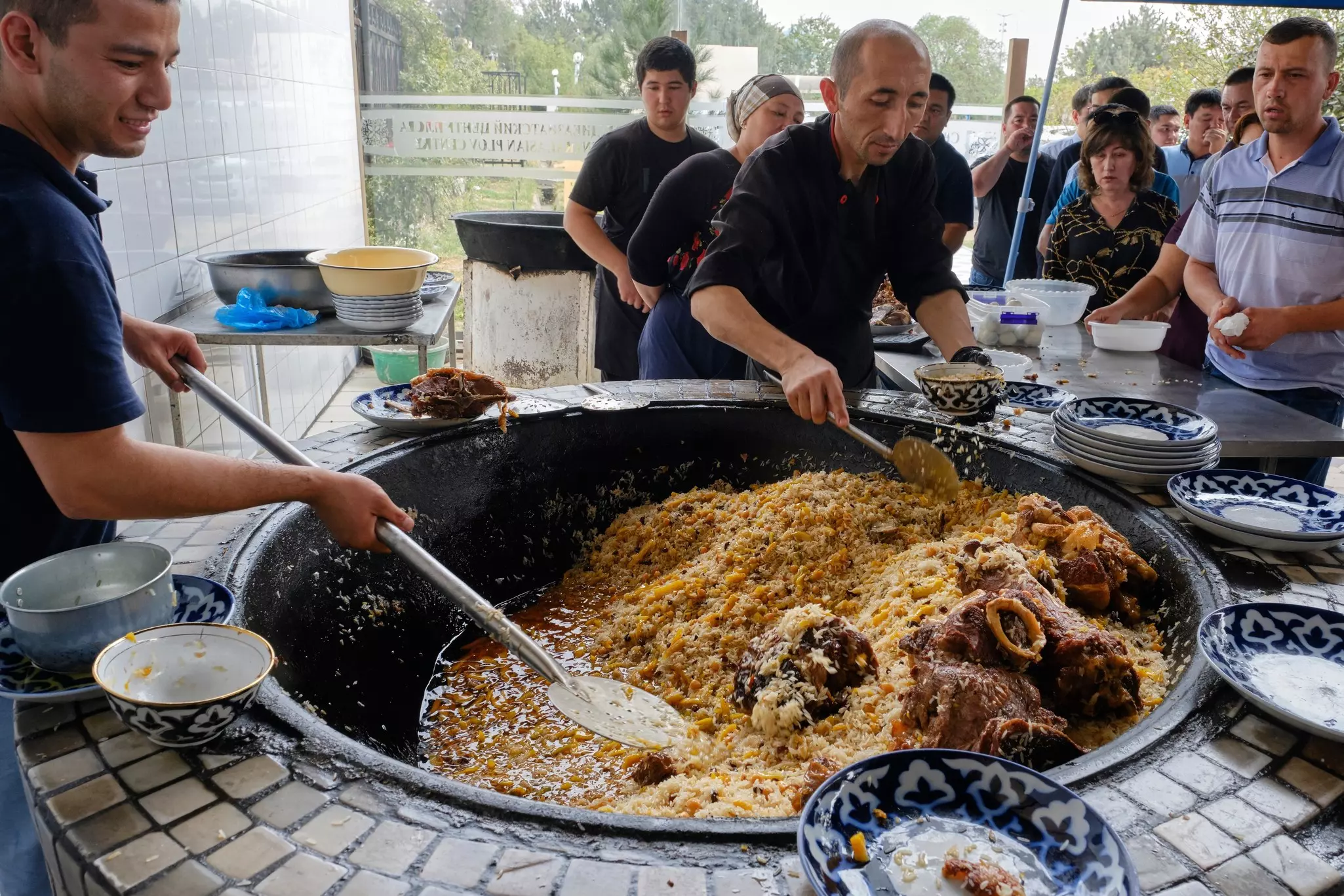
Celebrate Uzbekistan’s culinary heritage with plov
Traditionally cooked by men, plov is central to the Uzbek identity, and every town and every family has a special recipe. The dish has even been recognized as part of the Intangible Cultural Heritage of Humanity by UNESCO. Traditionally, plov has its roots in Persian rice pilaf – a reminder that large parts of Uzbekistan were covered by Persian-speaking Zoroastrian kingdoms until the 7th century.
Trying plov is an essential travel experience in Uzbekistan. Cooked slowly in a large, cast-iron pot known as a kazan, plov typically contains mutton, lamb or beef (often fatty cuts), along with spices, onions and carrots. The Tashkent version sees most of the ingredients roasted before the plov is cooked, while the version from Samarkand tends to be layered and steamed, creating a lighter dish.
Where to try it:
To sample Tashkent's most photogenic plov, head to Besh Qozon, also known as the Central Asian Pilaf Centre. Enormous wood-heated cauldrons churn out around 6000 servings every day, including tasty svaderniy (wedding) plov with extra ingredients such as chickpeas and raisins.
For the plov of the people, head to Tashkent's Chorsu Bazaar and try the version served up along Ovqat Bozari food street, east of the dome. After eating, drop into the market for some tasty dried fruit for a tasty desert.
Family-run restaurants serve great plov in Samarkand; try the popular Sharof Bobo Oshxonasi, where servings often run out by around 1pm.
In historic Bukhara, head to The Plov for hearty lunchtime portions with the option of extra quail eggs, horsemeat or bone marrow.
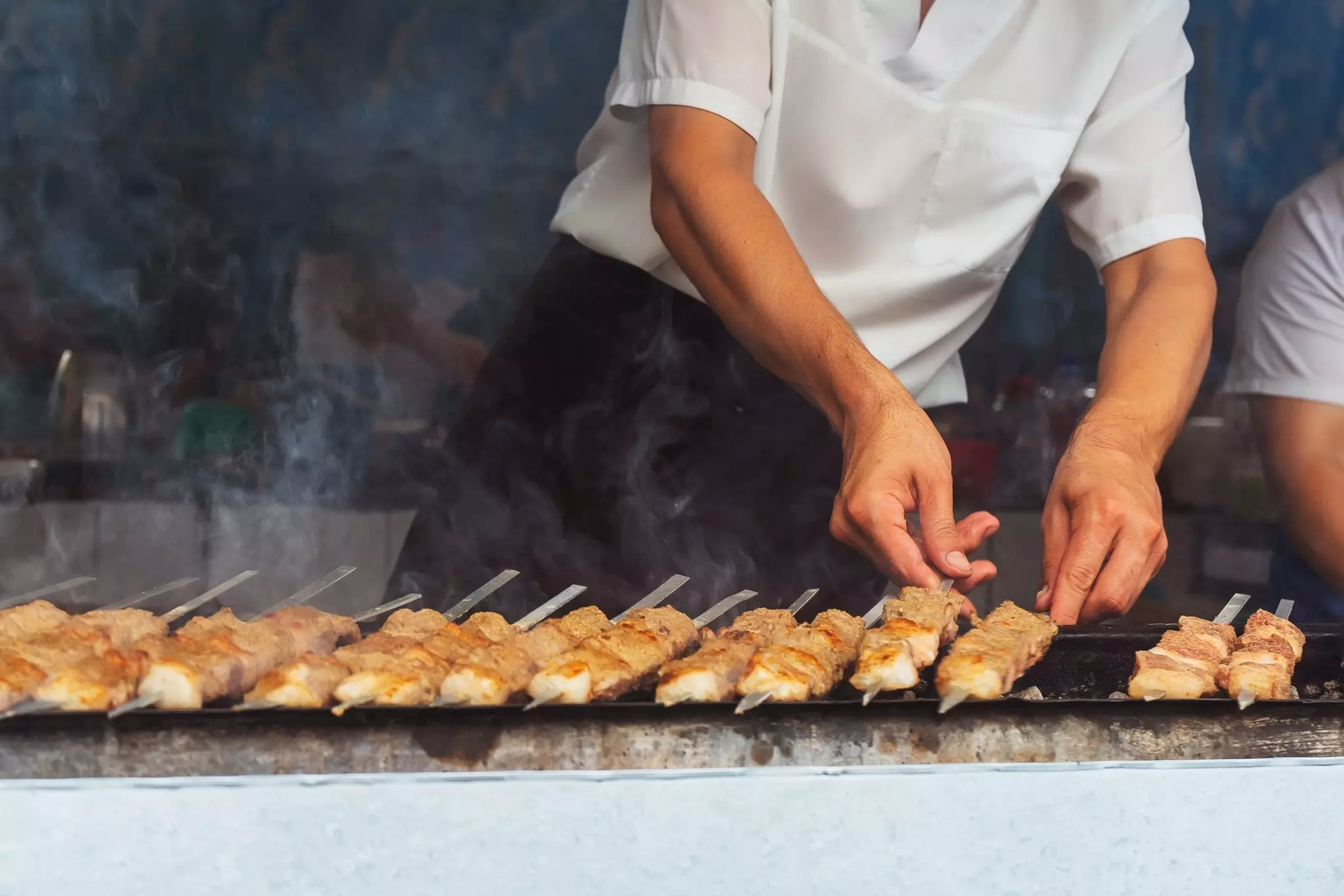
Meat, charcoal, magic...
Almost as ubiquitous in Uzbek cuisine as plov is shashlyk – meat grilled on skewers. You'll find hunks of mutton, lamb, beef, chicken, liver and kofte-like skewers of olyulya (ground beef) on sale almost everywhere. Juicy, fatty cuts are spiced and cooked over hot coals, lending the meat a rich, smoky flavor.
Shashlyk restaurants jealously guard the recipes of their marinades, ensuring plenty of variety. Once grilled to perfection, the meat is pulled off the skewers and served with bread, a sprinkle of fresh herbs, and a tomato and onion salad called achichuk.
Kebabs aside, other delights for the carnivorously inclined include hacip (boiled sausages made from minced lamb offal and rice), qazi (or kazy – horse meat sausages) and Turkish-inspired dolma (grape or cabbage leaves stuffed with meat and rice).
Where to try it:
Tashkent has been serving shashlyk to Silk Road travelers for centuries; sample some of the best at Pakhta Ko’chasi Kebab on Janon St, run by the same family for 40 years. Close to Do’stlik Recreational Park, Caravan is another good shashlyk spot.
In Samarkand, get your shashlyk fix at Mansur Shashlik – it's great for meaty flavors, as is Old Havuz Restaurant, to the north of the Registan.
For those roaming deeper into Uzbekistan, Terrassa Cafe in Khiva is a veritable meat feast, and you can enjoy your shashlyk with a view of mosques, medressas and minarets.
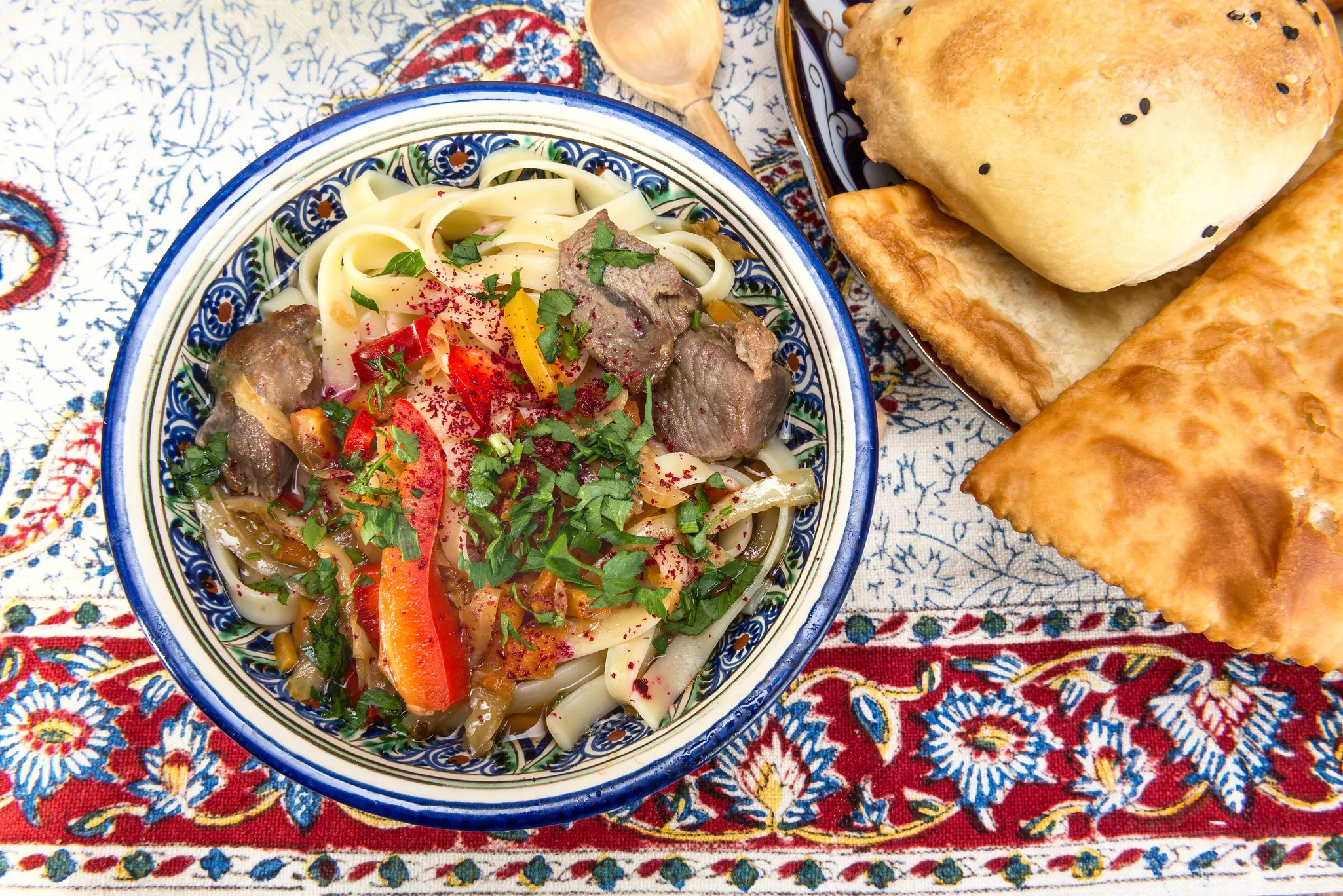
Chinese-inspired deliciousness
According to legend, laghman – Uzbekistan's Chinese-influenced noodle soup – came about as a result of three hungry Silk Road travelers meeting and deciding to pool their resources. From humble flour, dried meat and herbs, a dish found all over the country today was born.
Advertisement
The modern version consists of long, flat noodles in broth, topped with separately cooked mutton (or beef) and finely chopped vegetables (onions, bell peppers, aubergine, carrot, potato), then finished off with a riot of fresh herbs.
Regional variations are worth tracking down. In Tashkent, Uyghur-style, hand-pulled chuzma-laghman hints at the ancient Chinese roots of the dish; elsewhere Uzbek-style noodles cut into long strips dominate. Another variation on laghman is qavurma laghman, served without broth.
In Khiva, look out for shivit-oshi (green noodles prepared with fresh dill); they come topped with fried meat and vegetables. Elsewhere, you may encounter shilpildok (noodles with horse meat and broth – similar to Kazakh beshbarmak) and naryn (horse meat sausage with cold noodles).
Where to try it:
The Silk Road put noodles on the menu in Khiva centuries ago; sample them at Khorezm Art Restaurant, where you can enjoy Khivan specialties in the shadow of the Allakuli Khan Medressa.
A trading hub for Chinese merchants for centuries, Tashkent is another good spot for laghman; Qorasoy Laghman is a great noodle stop after a visit to Khast Imom square.
In Bukhara, Dilkor Lagman in the southern suburbs is popular for its signature laghman and samsa (baked meat pastries).
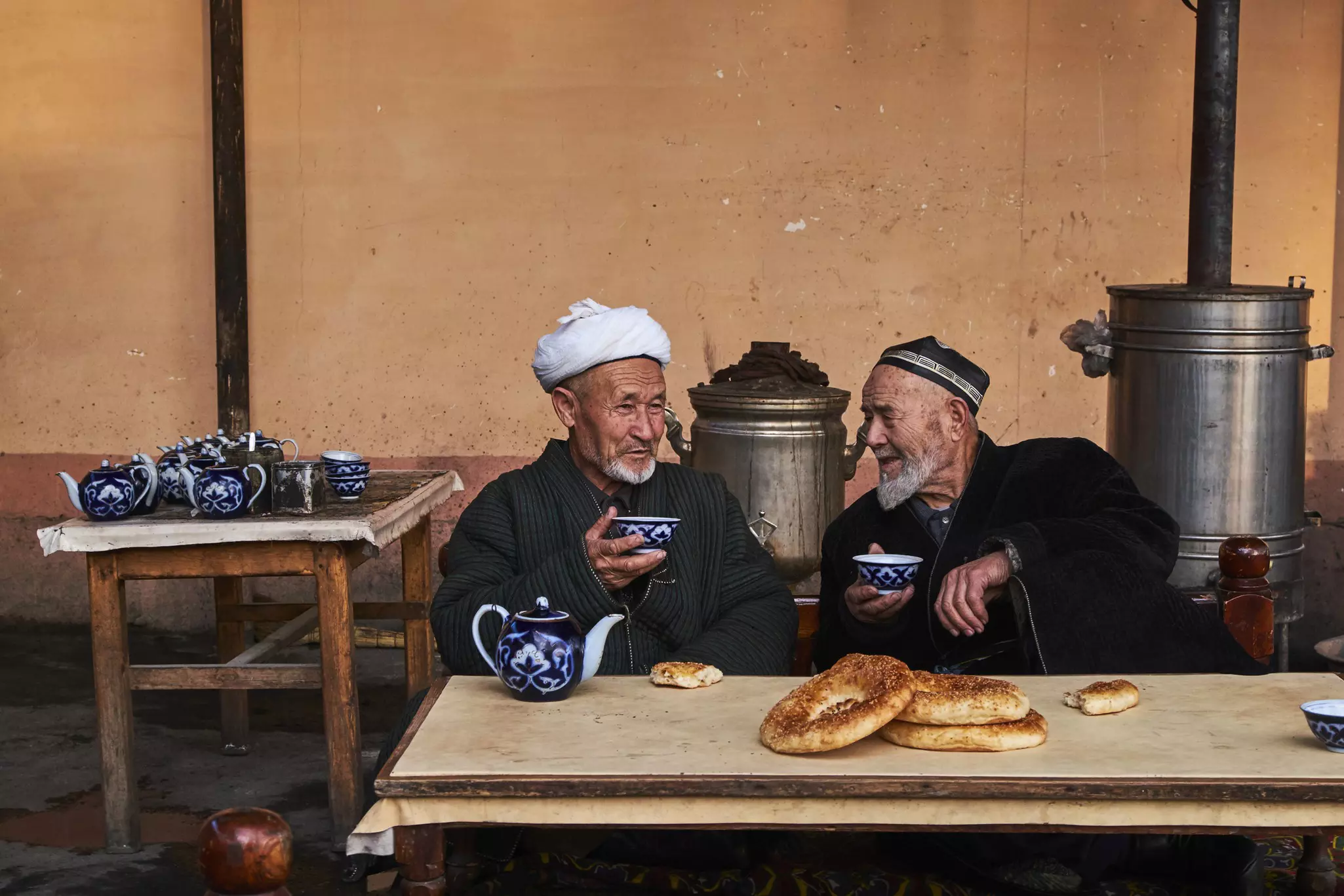
Tea traditions and Uzbek wines
Step into one of Uzbekistan's ubiquitous chaikhanas – local tea houses, serving a similar social role to pubs – and you’ll find yourself surrounded by men enjoying leisurely conversations, playing backgammon, clinching business deals and putting the world to rights while drinking tea from bowl-like cups.
Green tea tends to be more common in Uzbekistan, but in Tashkent and Karakalpakstan, you'll also encounter a mixture of black and green tea with lemon and honey. Tea with sugar is known as khand-choy; special occasions call for shirchoy, a Tibetan-style mix of tea, milk, salt and spices.
Uzbekistan's tea brewing ritual, known as kaytar (meaning "to return"), is elaborate. First, tea leaves are steeped in boiling water to brew briefly, then the tea is poured from the teapot into the bowl-like cup and back again three times.
While chaikhanas are traditionally the domain of men, some will allow foreign women to enter. Even if you are unable to visit a chaikhana, you will be served tea before and after any meal, so gender isn't an obstacle to a enjoying a cuppa.
Another popular drink to wash down meals is ayran, made from katyk (fermented cow’s or sheep’s milk) mixed with water, herbs, and a dash of salt. You’re likely to encounter it at breakfast time in traditional Uzbek guesthouses.
Many Uzbeks avoid alcohol for religious reasons, but travelers can sample excellent vintages made from both international and local grape varieties. Wine has been made in the Fergana Valley since the 4th century BCE. Marco Polo raved about the quality of Samarkand’s and Bukhara’s wines in the 13th century, and the arrival of the Russians saw a wine-making revival in the 19th century.
Where to try it:
Traditional chaikhanas abound in Tashkent; for an upmarket version, visit The Choyxona, blending Uzbek and European tea traditions.
Samarkand's Siab Bazaar, in the shadow of the blue domes of Bibi Khanym Mosque, is wrapped around a charming central chaikhana.
For a memorable tea shop stop, visit the Zinbardor Mosque in Kokand in the Fergana Valley, then drop into the shashlyk-scented chaikhana next door.
Samarkand's Bagizagan Hotel hosts tastings of wines from the Bagizagan winery in the Zarafshan Valley, which you can also visit on winery tours. Then there's the Hovrenko Wine Factory, where tastings include wines, balzams (medicinal liqueurs) and cognacs.
Near Tashkent, the family-run Uzumfermer Winery offers vineyards tours, followed by tastings of its pinot noir, saperavi and hadji murat wines.
Break bread with locals
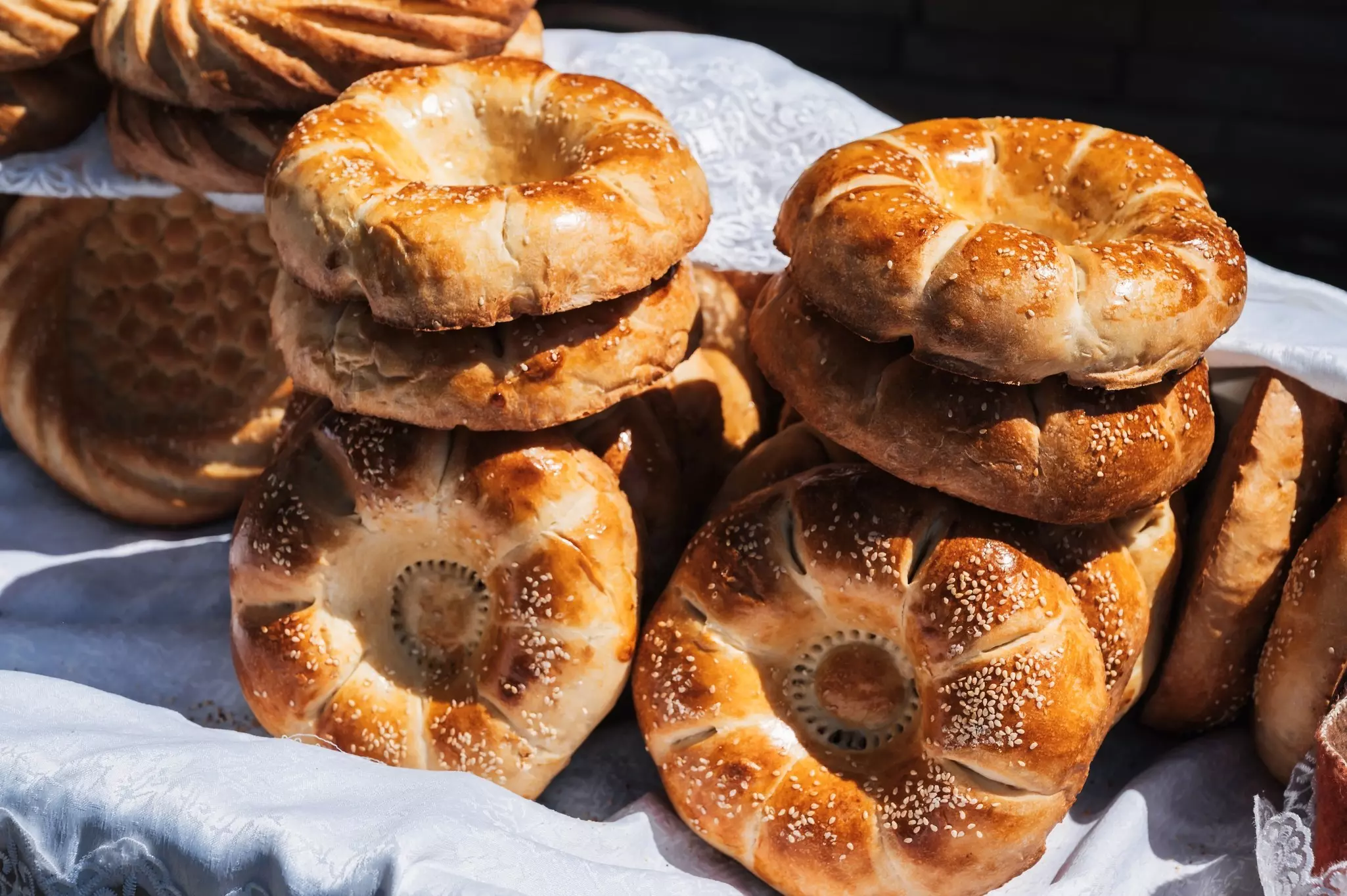
One of the pillars of Uzbek cuisine, the flatbread known as non is cooked in tandoor-style ovens; often decorated, it's central to cultural customs and celebrations in the country. Regional variations abound – in Tashkent, chow down on patir non (made with milk); the Samarkand version often contains onions and meat.
In the Fergana Valley, katlama (flatbread greased with butter or brushed with katyk yogurt) is present at every meal. To show due respect to bread, break it by hand and never place it with the decoration facing down.
Uzbek bread pairs deliciously with the country's thick, moreish soups, which are fantastic winter warmers. The most popular is shorpa, a meaty broth soup with vegetables and hunks of mutton, cooked on the bone and separated before serving. The regional variation of kovurma shorpa, where the meat is first fried, is found in the south of the country.
Other popular soups include mastava – a rice soup with beef and vegetables, often topped with sour cream – and moshhurda – a thick soup made from boiled beef or lamb bones with rice and mung beans. Also look out for nohat shurak with chickpeas and beef, usually accompanied by a piece of horse-meat sausage.
Where to try it:
The best bread you'll find is the version hand-made in Uzbek homes, but you'll find non for sale everywhere, from chaikhanas to shashlyk restaurants and bakeries in the country's bazaars. Visit Tashkent's Chorsu Bazaar where you'll see stacks of hot non bread being wheeled around in prams like newborns.
Samarkand's Tourist Information Centre can arrange courses in baking non bread.
Chow down on street food
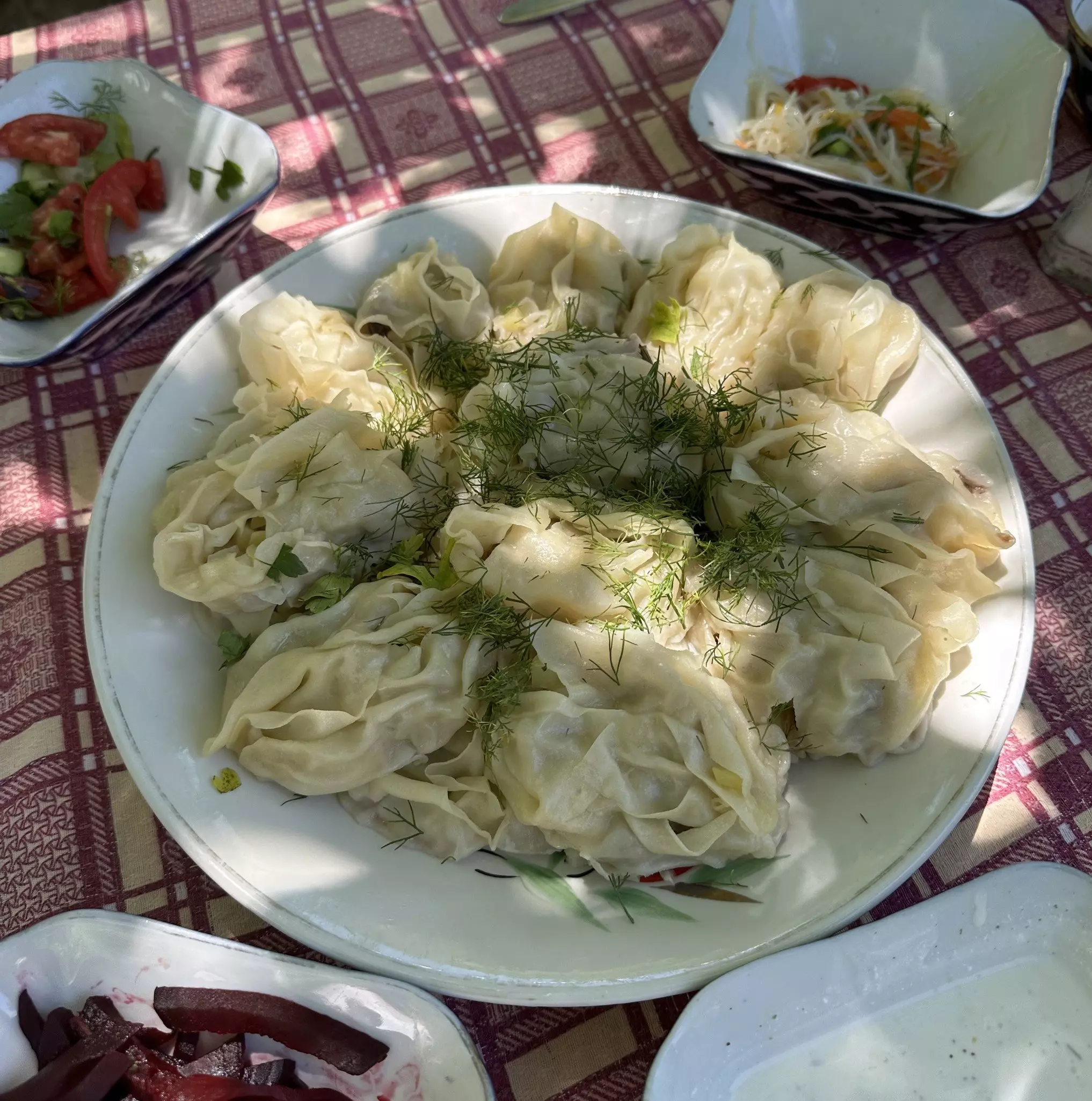
Uzbek street food is great for budget travelers. It's inexpensive, flavorful, and filling enough to get you through a siege. Pride of place goes to manty, large steamed dumplings with a filling of finely chopped meat. It’s the quintessential food of nomads, a soup and main in one: bite a hole in the dough, drink the meaty juices, then gobble up the rest.
Other doughy delights include smaller chuchvara dumplings, which are served in a vegetable broth or fried till crispy. Then there's honum (steamed, log-shaped dumplings stuffed with potatoes and onions) and Khiva's distinctive tuhum-barak (square dumplings with raw egg poured into the dough just before boiling).
The crispy, flaky, triangular pastry known as samsa, stuffed with minced or chopped meat and baked is Uzbekistan’s answer to the samosa. In fact, it was Central Asian traders who introduced the concept to India in the 13th century. Offal-stuffed gumma samsa is a particularly moreish, tasty variation.
Fresh fruit – including the country's famed melons – and dried fruit and nuts also make highly portable snacks, and they're sold everywhere in Uzbekistan. Also look out for tasty sweets such as seed- or nut-based halva, kozinaki nut brittle and khashtak, made from nuts and dried fruit.
Special occasions see special foods such as sweet bugirsaki pastries, Turkish delight, and treats made for the Navruz (Persian New Year) festivities, such as soft holvaitar, made from flour, sugar, butter and water, and sumalak, a sweet paste made from germinated wheat.
Where to try it:
Instead of being sold at street food stalls on street corners, in Uzbekistan, samsa and dumplings are usually found at covered markets, such as the Chorsu Bazaar in Tashkent.
Fruit, nuts and sweets tend to be sold at food markets such as Samarkand’s Siab Bazaar. If you visit outside of the fruit harvest seasons, seek out dried versions, particularly dried melons and apricots.
This article was adapted from Lonely Planet’s Central Asia guidebook, published in November 2025.
Advertisement