Advertisement
Exploring the Marais neighbourhood in Paris - a hidden beauty

Kalpana Sunder
Jul 16, 2020 • 4 min read
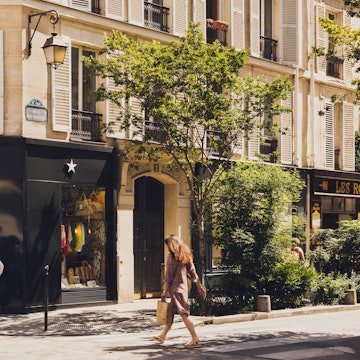
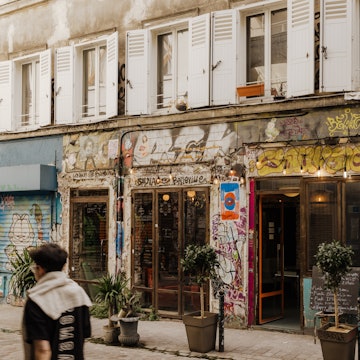
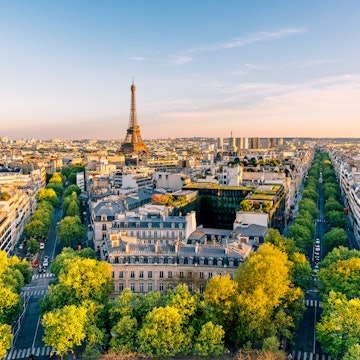
Le Marais in Paris, situated in the 3rd and 4th arrondissements, is famous for its medieval charm from cobblestone streets and flamboyant 17th-century private mansions called hotel particuliers. It’s Paris’s own version of Soho - a hidden world of courtyards, gardens, and a small Jewish population. It’s dotted with independent boutiques, artisanal cafes, design stores, and art galleries.
Advertisement
Before the Seine River was prevented from flooding by building high stone quays, Paris was surrounded by a belt of marshes. Long ago Marais was one of the swamps and an uninhabited marshy area. During Roman occupation, raised streets were built to cross these marshes. It soon became the stomping ground of many French kings, who gave this land to nobles and aristocrats. Later, Marais became the "kitchen" of Paris, where fresh vegetables were grown. After the revolution, it attracted a lot of artistic, bohemian people. It was one of the few neighbourhoods that escaped the move by Napoleon to modernize the buildings of Paris.
Visit the hôtel particuliers
In the 16th century, when noblemen and the bourgeoisie were looking for plots large enough for their residences, they turned to Marais, which wasn’t developed yet. Through the 18th century, they built hôtels particuliers (large one-family houses), many of which resembled lavish palaces. Today several of these handsome buildings, house museums, from the House of European Photography to the House of Picasso hold more than 5000 artworks by Spanish painter, Pablo Picasso. Another must-see building is the Museum Carnavalet which focuses on the history of Paris, from early Roman settlements to the French Revolution.
People-watch at Place de Vosges
Advertisement
This public park lined with chestnut trees and benches is the oldest planned square in Paris, surrounded by salmon pink buildings of the French nobility, with brick and stone facades and slate roofs. The square built-in 1612, by Henri 1V, used to be the venue for tournaments and duels, and later became an open-air stage for choirs. This was where celebrated writer Victor Hugo lived in house no 6, which is today a museum, showcasing his life and work. Stroll through the arcaded walkways that line the four corners of the street, lined with art galleries and boutiques. Hôtel de Sully, another famous building here, is a renaissance style building which used to be the home of the Duke of Sully.
Explore the Jewish district
Le Marais has been home to a vibrant Jewish community, since the 13th century. The Rue des Rosiers, packed with delis, old hamaams and bakeries is the heart of the Jewish community, with Middle Eastern food from falafels to Jewish pastries, kosher delis, bookstores, and synagogues. Have a falafel meal at the popular L'As du Fallafel with long lines in front of the shop, or have a crepe at La Droguerie. Visit the Mémorial de la Shoah, a moving memorial to The Holocaust, where limestone slabs are engraved with names of deported French Jews.
Shop till you drop
Some of the city’s most popular shopping streets are here; the two main retail streets are Rue des Francs-Bourgeois, and the Rue Vielle du Temple lined with perfume shops, women’s wear, and trendy homeware shops. Don’t miss Merci, a concept store housed in a 19th-century fabric factory building, which sells vintage clothing, homeware, and gifts. Another icon is the BHV Marais- a department store built in 1856, stocking all the top brands under one roof. The Village Saint Paul Le Marais has more than 200 antique dealers and design shops.
The oldest covered market in Paris created in 1615, is here - the Marche des Enfants Rouges which sells vegetables, fruits, cheeses, and everything from couscous to bento boxes. If you are here on a Sunday, do head to the Marche Bastille, an atmospheric market where locals stock up on fresh fruit, sausages, and fresh produce.
Eat your way through the district
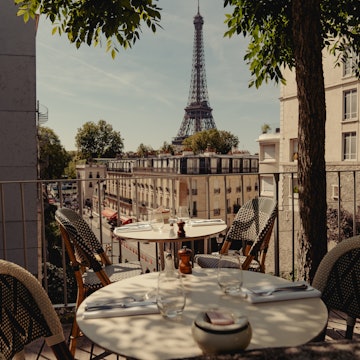
From Michelin starred restaurants like L’Ambroisie to street food like bagels or crepes, the area offers a wide variety of options. Traditional tea rooms and bakeries as well as famous pastry chefs like Yann Couvereur have opened shops here. Come evening, Marais is a lively place with various trendy bars. Choose from rooftop bars like Le Perchoir with great views over the rooftops to hipster bars like La Perle or have speciality crafted cocktails at Le Mary Celeste with small tapas plates, and great oysters, or stop at the award-winning Little Red Door.
Ferret out the quiet spots
Visit the Baroque 17th century Roman Catholic Church of Saint Paul Saint Louis, built-in 1641, which was once the place where French kings came for their confessions. Anne Frank Garden, a peaceful community garden, just behind the Centre Georges Pompidou, pays homage to the famous victim of The Holocaust, Anne Frank. The park has a graft of the chestnut tree that Anne Frank admired from her window. Another peaceful spot is the Jardin de l’Hôtel de Sens behind a medieval mansion turned library. Between the beautiful church of St-Gervais and the tiny Couperin square, is the charming Rue de Barres, one of the oldest streets of the quarter, with cobblestones and timbered houses.
India Homepage: www.lonelyplanet.com/en-in
Advertisement