Advertisement

Cherry blossoms in Tokyo. Pal Teravagimov/Shutterstock
Spring in Japan means sakura (cherry) blossoms. And that's just one of the reasons to visit Tokyo at this time of year: there are also traditional festivals, sumo, seasonal delicacies and a whole lot more in bloom in the city's parks and gardens.
Bear in mind that spring is the most popular time of year to visit Japan, and book your accommodation well in advance. Be especially wary of the string of national holidays, known as Golden Week; it's a peak travel period for Japanese that can drive up hotel rates. In 2026, Golden Week will run from April 29 through May 6.
Advertisement

See the cherry blossoms, of course!
Like someone took a paintbrush to the city, large swathes of Tokyo go from gray to blush pink come cherry-blossom season. Parks like Yoyogi-kōen and Ueno-kōen are famous for sake-drenched cherry-blossom-viewing parties called hanami. Waterside promenades, such as the one alongside Naka-Meguro's canal, Meguro-gawa, and the one opposite the Imperial Palace's moat, Chidori-ga-fuchi, erupt with canopies of blossoms.
Sakura (cherry) season, which begins in late March or early April, is like Carnival – one collective, citywide excuse to let go of daily cares and live for the moment. It’s a centuries-old tradition, inspired by the fleeting beauty of the blossoms, which last no longer than 2 weeks. What does last longer is all the sakura-themed treats sold at convenience stores and chain cafes. Sakura latte, anyone?
In 2026, the Japan Meteorological Corporation estimates the cherries will bloom the fourth week of March. Download the fun Sakura Navi app (on Google Play) to track the blossoms all over Japan.

And see other blooms as well
Cherry blossoms hog the spotlight, but spring sees a whole cavalcade of seasonal blooms. They may not be an excuse to have a drinking party in the afternoon, but they definitely draw plenty of admirers. Bonus: from mid-April until early June (when the rainy season sets in), Tokyo is warmer and sunnier than it is during sakura season.
Soon after the last cherry blossoms fall, bold, bright azalea (tsutsuji) flowers begin appearing around the city. Unless you visit during this season, from the second week of April through the first week of May, you may not realize just how much of Tokyo's ornamental shrubbery is made up of azaleas. The most dramatic spot to see them is at shrine Nezu-jinja, which has a whole garden of them – some 3000 shrubs representing over a hundred varietals.
Advertisement
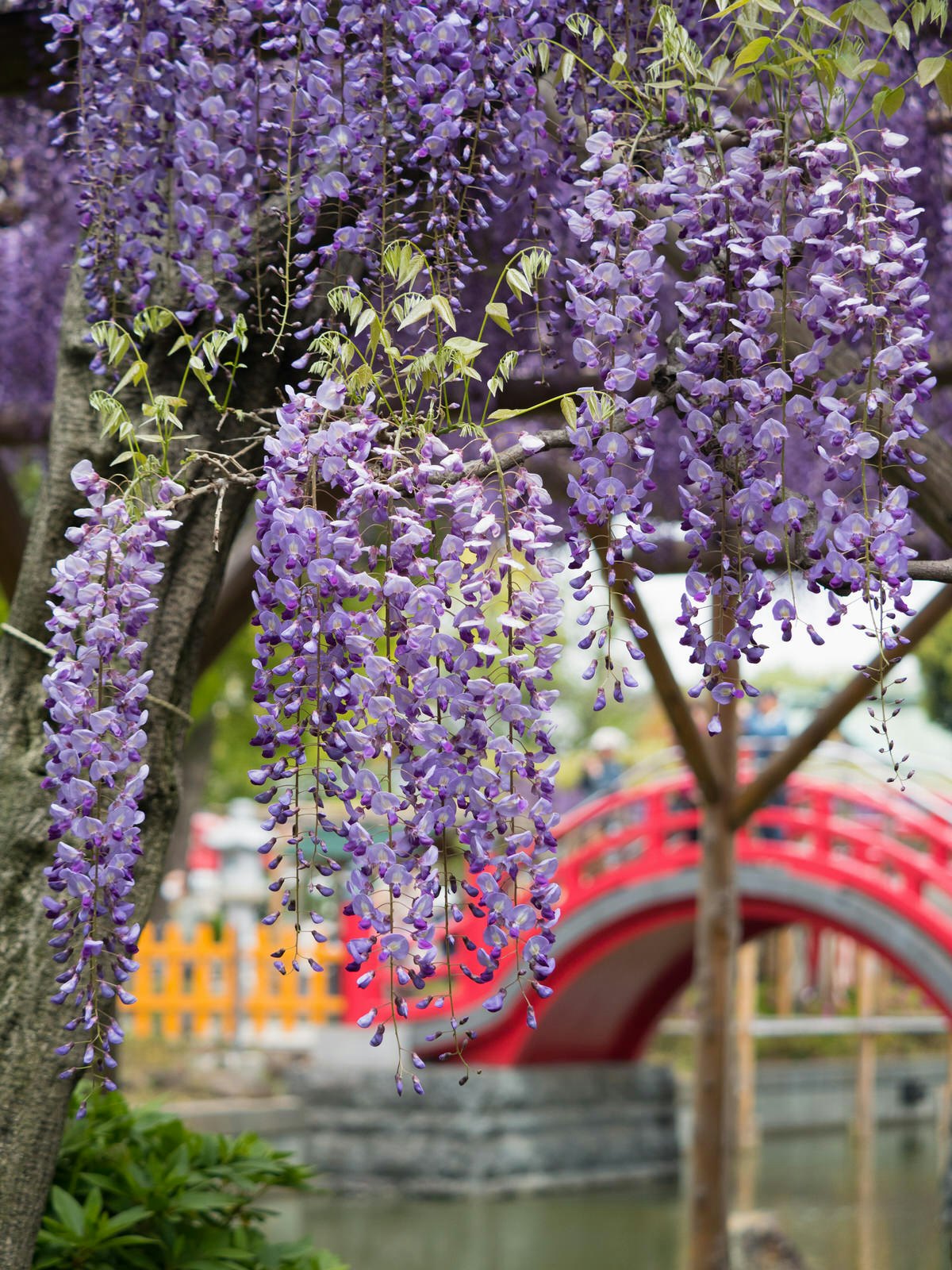
Following a week or so behind the azaleas (usually around late April) are the languid, lavender blooms of the wisteria (fuji-no-hana). Kameido Tenjin, a large but otherwise somewhat ignored shrine in Tokyo's far eastern edge, is the best place to see them. There's a famous photo spot here (warning: it gets very crowded) where you can capture the shrine's signature red, arched bridges with the drooping flowers in the foreground. Koishikawa Kōrakuen – better known for its plum blossoms and fall foliage – also has a small area with some wisteria trellises.
Around mid-June – the not-quite-summer rainy season – come the irises, which were a favorite of the late 19th-century Empress Shoken. Her husband (the Emperor Meiji) planted an iris garden for her at what is now Meiji-jingū Gyoen, the pretty strolling garden attached to Meiji-jingū. There are some 1500 irises here, which we can be sure is a fairly accurate figure because (according to shrine’s website) staff count the blossoms every day. The June rains also bring hydrangea (ajisai), which are a favorite of Tokyo urban gardeners. True fans of these magnificent, multihued orbs will want to make a pilgrimage to Meigetsu-in, a temple in seaside Kamakura (an hour south of Tokyo) that is also known as Ajisai-dera (Hydrangea Temple).
You could also go wild and take an overnight ferry down to Hachijō-jima to see the freesias, which bloom at roughly the same time as Tokyo's sakura (and where it will definitely be warm and sunny).

Catch a traditional festival
May is the start of matsuri (festival) season, when shrines take their kami (Shintō gods) out for a spin on mikoshi, ornately decorated portable shrines that are paraded through the neighborhood. Tokyo's matsuri go back centuries – to the founding years of the city in the 1600s – and the mikoshi-bearers look the part. Expect to see plenty of colorful happi (short, cotton kimono-style jackets), hachimaki (headband worn as a symbol of resolve) and, for the men, fundoshi (the loin cloths that you see on sumo wrestlers).
In mid-May, the Kanda Matsuri is a major event put on by Kanda Myōjin on odd-numbered years, so look for it in 2027. It includes a procession all through central Tokyo (hitting neighborhoods like Akihabara and Nihombashi) followed by a parade of mikoshi around the shrine precincts. The Sanja Matsuri, put on by Asakusa-jinja, is the biggest matsuri of them all, known to draw over a million spectators. This festival features parades on both days, but the biggest mikoshi come out on Sunday.
Or a festival that's just a little bit naughty
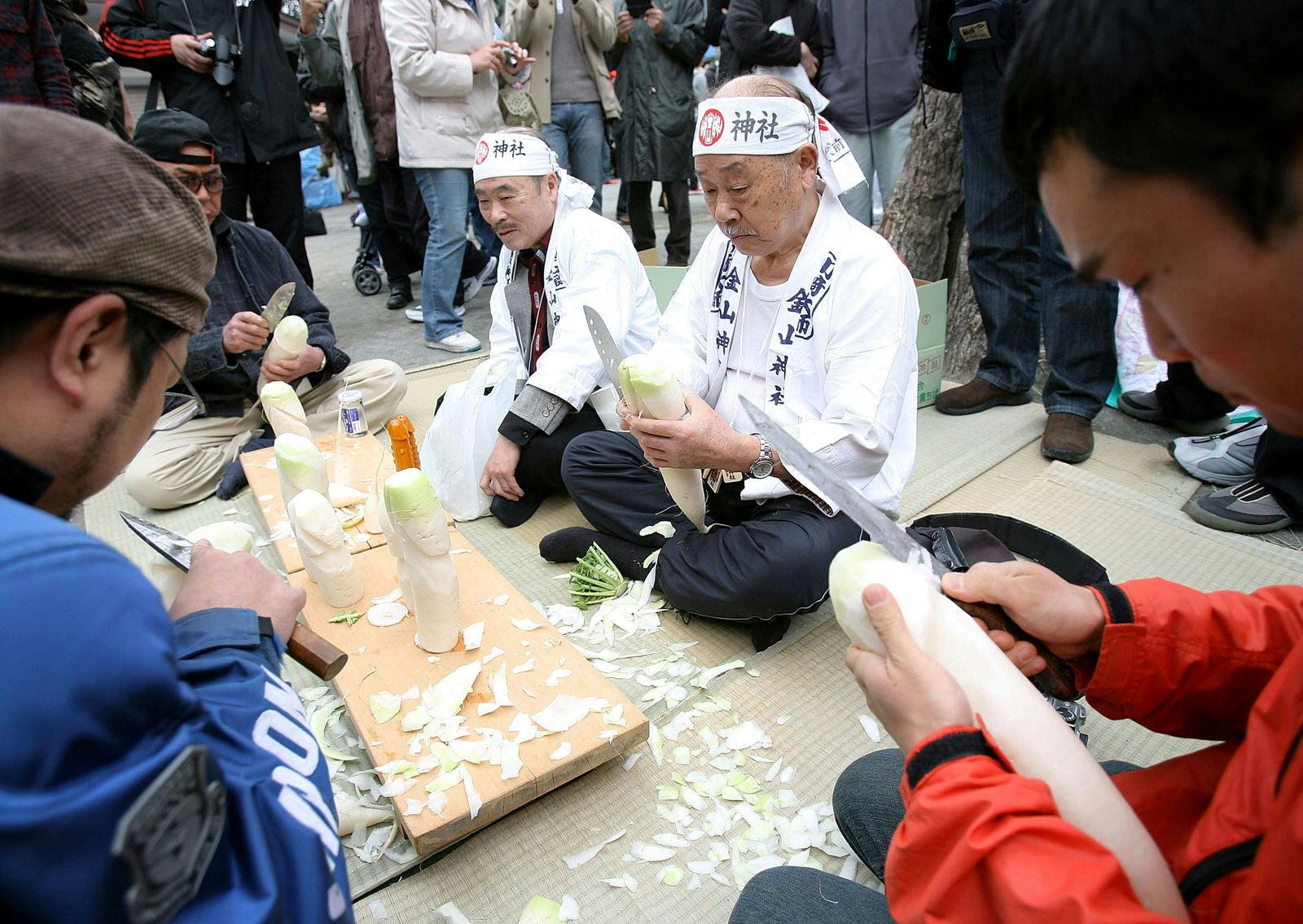
Might we also suggest a detour to Kawasaki (just south of Tokyo) for the annual Kanamara Matsuri, otherwise known as the penis festival? As at other traditional festivals, this one sees a parade of locals hoisting mikoshi through the streets – except that many of these mikoshi are strapped with giant phalluses. It’s a jubilant affair, with some revelers arriving in drag or fancy dress. There are all sorts of naughty talismans and suggestive snacks available, too. Don’t miss the locals carving radishes into, ahem, you know.
Kawasaki shrine Kanayama-jinja hosts the event, which takes place on the first Sunday of April (5 April in 2026). The shrine is known historically as a place to pray for a happy marriage and a healthy pregnancy but also for protection from sexually transmitted diseases.

See sumo wrestlers in the ring...and holding babies
The second of Tokyo's three annual grand sumo tournaments takes place in mid-May (from May 10-May 24 in 2026) – tickets go on sale from April 4) at the national sumo stadium, Ryōgoku Kokugikan. A few weeks earlier, in late April (2026 dates to come), Asakusa hosts its annual Naki-zumo event at Sensō-ji, which pairs sumo wrestlers and babies in a cry-off. The wrestlers pull faces, competing to make their baby cry the loudest. This may sound bizarre (and a little mean) but the Japanese have an age-old belief that a crying baby will grow up to be big and healthy. Sometimes the babies are dressed up as tiny sumo wrestlers.

Taste spring specialities
Japanese food is famous for being exceptionally seasonal and while nowadays, especially in Tokyo, you can get just about anything year-round, you do pay quite a bit for it. So for a populace that has spent the last few months eating an awful lot of cabbage, daikon and mikan (satsuma mandarin oranges), the bounty of spring is a real boon. The first sign of the changing season is the appearance on menus of takenoko (bamboo shoots). The tender, slightly bitter shoots are usually parboiled or steamed with rice (a dish called takikomi gohan). There are also sansei, a catch-all term (meaning mountain vegetables) for the various roots and shoots – such as fukinoto (butterbur buds) and warabi (fiddlehead fern) – that can be foraged in the mountains in spring. They are especially delicious served as tempura.
Asparagus, spring onions, nanohana (rapeseed) and mizuna (a kind of young mustard green) appear this time of year in supermarkets and farmers' markets, like Farmer's Market @UNU. And finally, in June, the sakura bear fruit. (Not Tokyo's ornamental ones, sadly, but ones in orchards to the north.) Check department store basement food halls, like Food Show, for sato-nishiki, Japan's most prized variety of cherry. They're small, more vermilion – like the color of a shrine's torii gate – than deep red, with a rich sheen and a sweet-meets-tart flavor.
Advertisement
Take your Japan trip with Lonely Planet Journeys
Time to book that trip to Japan
Lonely Planet Journeys takes you there with fully customizable trips to top destinations – all crafted by our local experts.