Advertisement

Musician Emmeline Gracie on Grafton St in Dublin. Artur Widak/NurPhoto via Getty Images
Booming Dublin has become one of Europe’s most expensive cities – and visitors should expect to splash out to enjoy its many pleasures. Yet the Irish capital offers up a wide selection of free attractions and experiences that reveal the city’s peerless personality.
From acclaimed museums and art galleries to city beaches and street musicians, here’s how to tap into the city’s culture and charm – without spending a cent.
1. Go people-watching on Grafton St and St Stephen’s Green
You’re never far from music in Dublin, and the city’s buskers provide year-round entertainment along pedestrianized Grafton St. Catch a tune, then move along to the next entertainer as you soak up the vibes with the crowds.
Next, head to nearby St Stephen’s Green, the grandest Georgian park in Dublin and a fashionable spot since it first opened to the public in 1880. With 22 acres of manicured lawns, colorful flower beds, a Victorian bandstand, pond and playground, it’s a calm space to relax on a bench or hang out on the grass. Though you can expect to spot swans, sculptures, ducks and dogs, the highlight here is the people-watching.
Advertisement

2. Photograph deer in the Phoenix Park
The ultimate urban escape, Phoenix Park is the largest enclosed city park in Europe and gives serious bang for zero euros. Join walkers and joggers, cyclists and cricketers, footballers and families, all of whom come to breathe fresh air, enjoy cultural and historic sites, spot the herds of fallow deer and perhaps catch a glimpse of the park’s most famous resident, the President of Ireland.
Planning tip: Áras an Uachtaráin, the president’s official residence, offers free guided tours on Saturdays, which need to be booked in advance.

3. Marvel at modern masterpieces at IMMA
Housed in the Royal Hospital Kilmainham, a magnificent 17th-century building modeled on Les Invalides in Paris, the Irish Museum of Modern Art (IMMA) has a setting worthy of the contemporary treasures on display inside. In its corridors and galleries, you’ll discover works by Louis le Brocquy, Lucien Freud and Mary Swanzy, and countless other installations, sculptures and moving images.
Planning tip: Don’t leave without exploring the grounds and formal gardens, where you’ll find more of the art collection and a mapped-out heritage trail.
4. Visit the restored diving bell that helped shape Dublin Port
In use from 1871 until the 1950s, the restored Diving Bell on Sir John Rogerson’s Quay is a Victorian feat of engineering that facilitated the below-water construction of Dublin’s deep-water quays. Today, this unique chamber houses Dublin’s smallest museum, which reveals the grueling work and personal stories of brave divers who dredged the riverbed, deepening the capital’s port and thus connecting it to the world – from within this very metal box

5. Take photos of Dublin’s famous Georgian doors
Dublin was once the second-most important city in the British Empire – and the Georgian-era British left a legacy of gracious architecture that defines Dublin’s city center today. You don’t need to be an architecture buff to enjoy the 18th- and early-19th-century streetscapes and private garden squares, where politicians and the professional classes lived in serious style. (They still do.) Today, colorful and highly photogenic Georgian doors with ornate fanlights and gleaming brass are synonymous with the city.
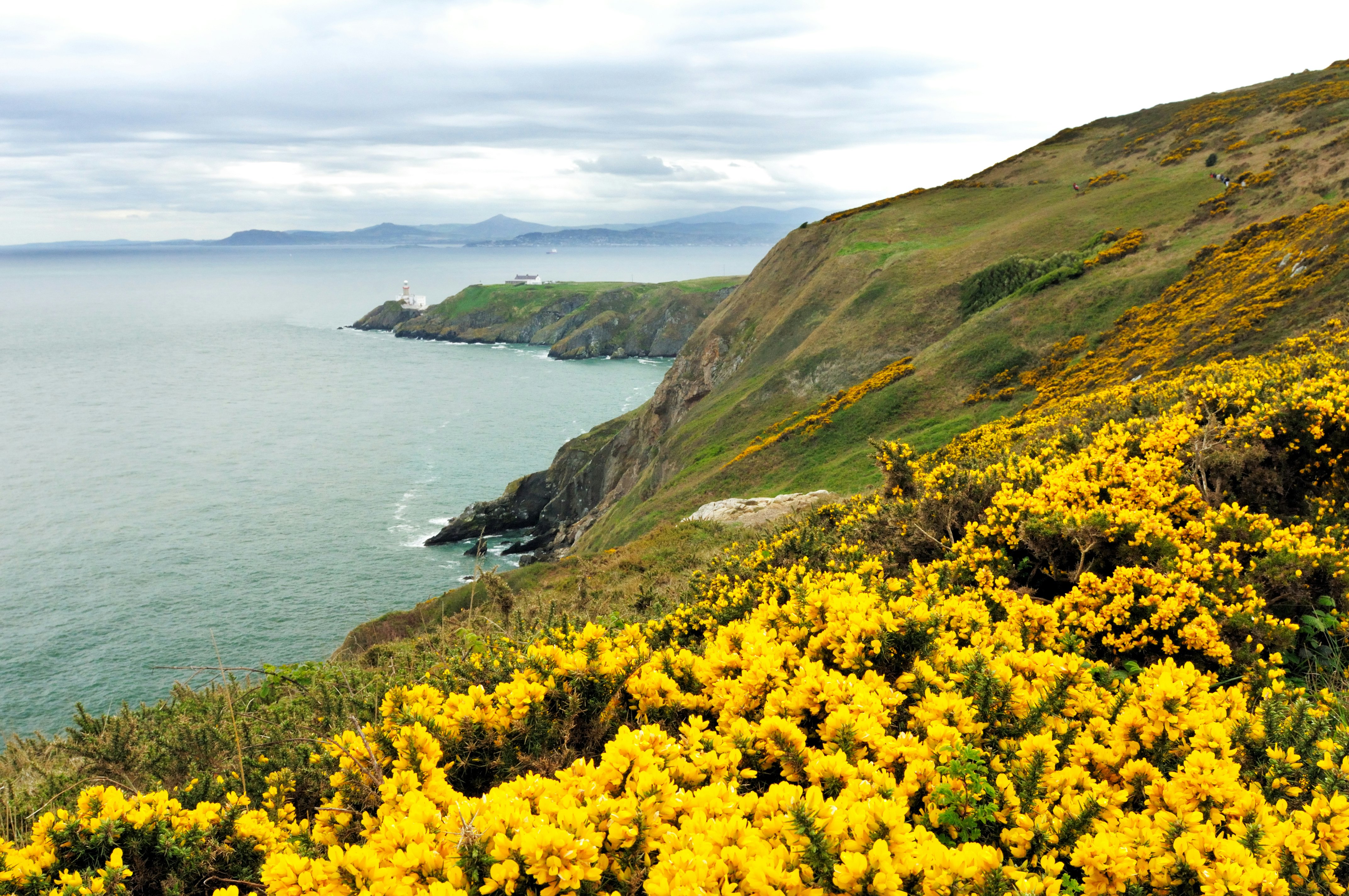
6. Take a day trip to Howth Head
The perfect day trip from the city center, Howth delivers a bit of country beauty within Dublin’s city limits. The Cliff Walk passes beautiful private houses before rewarding walkers with spectacular views across Dublin Bay. There are four waymarked routes to follow, with the full loop achievable in 3 hours. Look out for seals and seabirds, the small islands of Ireland’s Eye and Lambay, and the Hidden Beach (safest to admire from above). If your budget allows, don’t leave Howth without sampling fresh fish-and-chips on the seafront.

7. Admire modern art along with a free concert
Built in the 1700s as a private residence, an imposing Georgian mansion on Parnell Sq North is today home to the Hugh Lane Gallery and Ireland’s finest collection of contemporary art. Named for the celebrated art dealer and gallery director who founded it, this beautiful space displays works from artists from Monet and Manet to Sean Scully, and Harry Clarke’s kaleidoscopic stained glass.
Advertisement
Planning tip: Every Sunday at noon (except in July and August), you can combine great art with great music thanks to free concerts from Irish and international performers in the Sculpture Gallery. Booking ahead is necessary, with tickets released at 10am the Monday before each performance.

8. Stroll Dún Laoghaire’s East Pier and take a swim
A confection of Victorian and Georgian terraces overlooking a large harbor, the coastal suburb of Dún Laoghaire has drawn Dubliners for generations for leisurely strolls along its East Pier. In summer, continue to walk south along the shore to join the bathers on tiny Sandycove Beach, or head around the corner to the Forty Foot Pool, Ireland’s most famous swimming spot.
Planning tip: Swimming here is a popular year-round activity, so pack your swimsuit and join the group of hardy regulars who brave the waters all through winter.

9. Tour the National Botanic Gardens of Ireland
Tropical plants, spectacular structures and frisky squirrels are some of the delights on offer at the National Botanic Gardens of Ireland. The Turner Curvilinear Range and Great Palm House are the country’s most famous greenhouses, where exotic orchids, cacti, bamboo and bananas grow under glass. Covering 50 acres in Glasnevin, the gardens are a haven of rare trees and fragrant flowers, including many endangered species.
Planning tip: Free guided tours are offered each day (booking essential). You can also download official audio guides.

10. Go on a seaside nature walk along Dollymount Strand
Connected to the coast at both ends, long and skinny North Bull Island is a glorious nature reserve tucked into Dublin Bay. Come to jog or walk along the 3-mile Dollymount Strand, spotting seals at the northern end and kitesurfers at the southern one. Migratory species nest in the dunes, making the island a popular spot for birders, while the chilly waters are populated year-round by (brave) swimmers. There are designated bathing areas, should you feel like joining them.

11. Hunt for ancient treasures at the National Museum of Ireland – Archaeology
Prehistoric gold, Viking weapons, ancient ceramics and medieval shrines are some of the startling objects on display in the National Museum of Ireland – Archaeology. The museum combines interactive displays of these treasures with themed exhibitions.
Planning tip: A number of guided tours interpret the collection and transport you back in time, from the Stone Age to medieval Ireland. Check the event page for upcoming tours.

12. Find peace along Dublin’s waterways
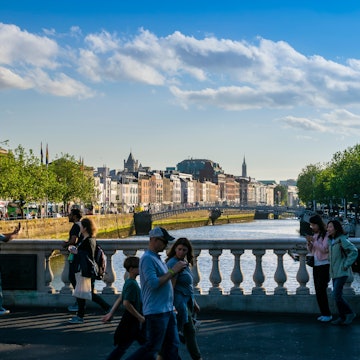
Two tranquil waterways running through the city, the Grand Canal on the Southside and Royal Canal on the Northside, wend their way west toward the River Shannon. Built in the 18th century (and eventually made redundant by the railways), they’re today largely traffic-free routes with peaceful bankside pleasure paths that lure walkers, joggers and cyclists. Take a picnic, grab a bench, admire the wildlife en route – and leave the buzz of the city behind you.

13. Wander the grounds of Dublin Castle
Built on the site first settled by Vikings in 841 CE, Dublin Castle dates back to the 13th century, having served as a fortress, prison, treasury and seat of English rule for 700 years. While you’ll have to pay for a guided tour, visitors can explore the atmospheric grounds on their own for free. Ponder history as you wander the cobbled squares, take in the castle’s striking exterior and sit in the intricate Dubh Linn Garden.
Planning tip: Don’t leave without visiting the free-to-enter Chester Beatty Library. This fascinating museum has an eclectic collection of rare and ancient manuscripts, artworks and artifacts, gathered by an erudite and well-traveled American magnate and philanthropist.

14. Look up to admire Dublin’s remarkable, historical and legendary residents
From statesmen and singers to patriots and poets, Dublin’s streets and squares are watched over by many of the city’s most notable citizens. Carved in stone and cast in bronze, these public sculptures commemorate and celebrate the capital’s proud history and culture. Look up as you walk and meet the famous and fearless, from Molly Malone to Michael Collins, the Children of Lir to James Joyce. On Custom House Quay, one of the city’s most evocative monument, Famine, is a collection of forlorn bronze figures commemorating the millions of Irish forced to emigrate during the 19th-century Irish Famine.
15. Wade out to Shenick Island
The pretty seaside town of Skerries in north Dublin is the starting point for a fun adventure on land and sea – and a place that’s especially great for kids. At low spring tide, don your wellies and walk across the mud flats to Shenick Island, where a lone Martello Tower (defensive fort) stands sentinel over the wildlife reserve. Though the island might look deserted, it’s a magnet for nesting gulls, cormorants and basking seals, with great views back to land.
Planning tip: You must check tidal times in advance and return to the mainland within two hours of low tide.
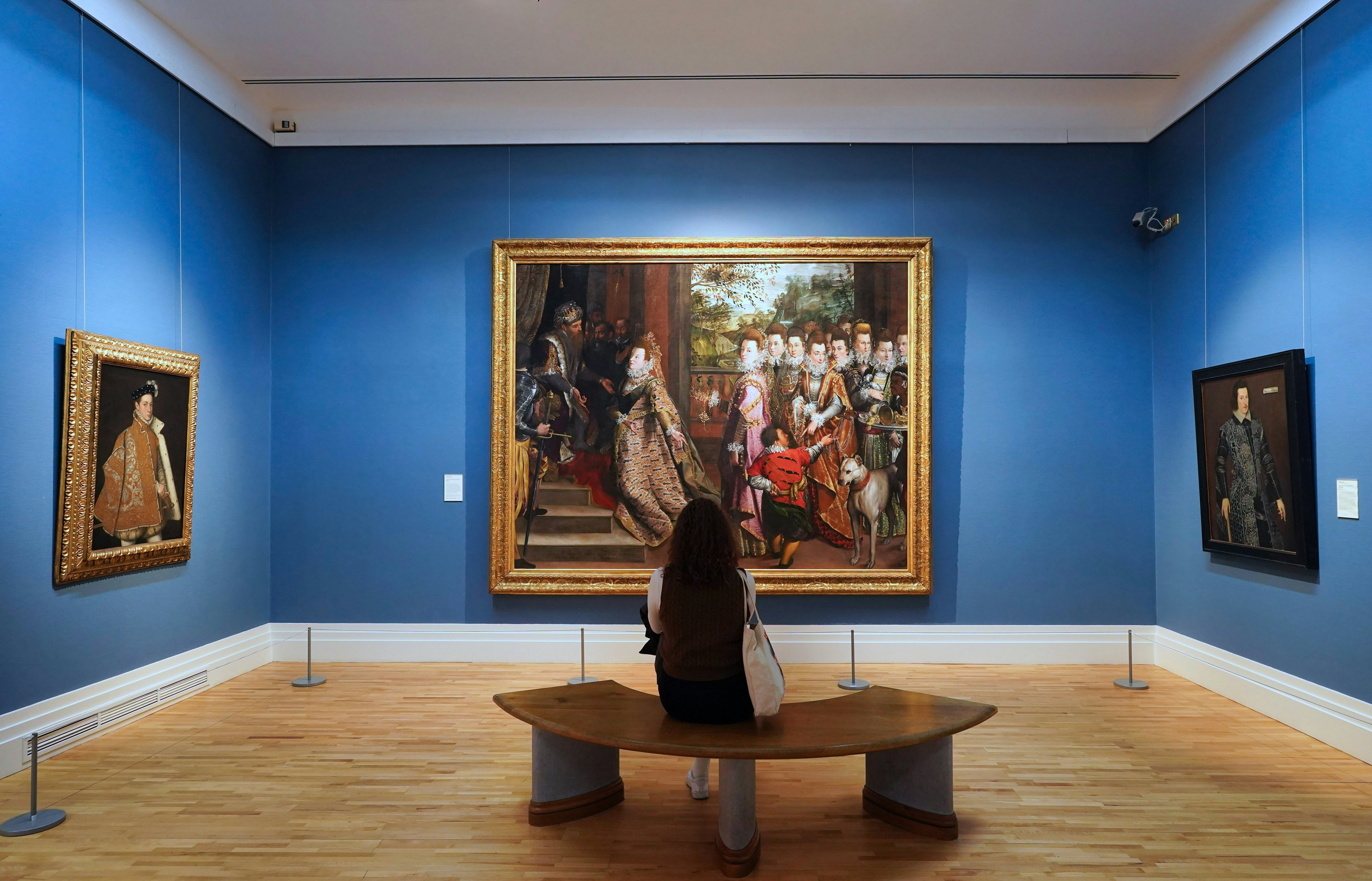
16. See masterpieces at the National Gallery
A great place to hide out on a rainy day, the National Gallery on Merrion Sq houses 2500 paintings, significant sculptures and thousands of artworks in watercolor, pencil and print. The permanent collection includes works by Vermeer, Caravaggio and Van Gogh, Osborn and Orpen, and can be navigated with free audio tours.
Planning tip: A fun work space lets children get creative, and free public tours are offered on the weekends.

17. Visit top monuments on the first Wednesday of each month
On the first Wednesday of every month, many Office of Public Works (OPW) Heritage Sites offer free admission to some of the country’s most popular attractions, such as the neoclassical pleasure house of Casino at Marino and Elizabethan Rathfarnham Castle. An Edwardian mansion in Phoenix Park, Farmleigh House was once home to the Guinness family – and is always worth a trip. With opulent interiors, it’s used today as a guesthouse by the Irish state and displays artworks, books and furnishings that once belonged to the original owners.
Planning tip: Free First Wednesday tickets are allocated on a first come, first serve basis and cannot be booked in advance.

18. Soak up the views in the Dublin Mountains
Encircling the city, the Dublin Mountains would probably just be hills in other parts of the world. Yet what they lack in height they more than make up for with scenery. Trails for every fitness level lace the mountains, with Carrickgollogan Forest Walk a good entry-level option. Popular with mountain bikers and families, the disused stone chimney of the lead mine, with its twisty staircase, is mesmerizing, while the viewing rock enables spectacular panoramas from south Dublin down to north Wicklow.
Advertisement
Take your Ireland trip with Lonely Planet Journeys
Time to book that trip to Ireland
Lonely Planet Journeys takes you there with fully customizable trips to top destinations – all crafted by our local experts.