Advertisement

The ancient city walls of Campeche, Mexico. Matt Gush/Shutterstock
When you travel through Mexico, reminders of its long and circuitous history are visible everywhere. Ancient human history is evident here too, manifest in countless archaeological sites, whispers of once-thriving societies and reminders of the people who walked these lands long ago. The best way to gain insight into Mexico’s complicated past is by exploring its historic sites. Here's our pick of the ones not to miss.

Advertisement
1. Área de Protección de Flora y Fauna Cuatrociénegas, Coahuila
Hundreds of turquoise pozas (pools) glitter across the Área de Protección de Flora y Fauna Cuatrociénegas, offering a glimpse into what Mexico once looked like: a warm, shallow sea filled with stromatolites – primitive rocklike organisms linked to the creation of the Earth's oxygen-rich atmosphere, and the beginning of microbial life. Stromatolites still line many of those pozas, with most estimated to be more than 3.5 billion years old. The surrounding Desierto Chihuahuaense (Chihuahuan Desert), meanwhile, has become one of the most biodiverse places on the planet. Studied since the 1960s, this reserve remains an invaluable place of evolutionary research for scientists at NASA and UNAM (Universidad Nacional Autónoma de México).

2. Parque Museo La Venta, Villahermosa
A winding trail in Villahermosa’s Parque Museo La Venta leads past impressive sculptures, stelae and colossal stone heads moved from La Venta, an important Olmec city 130km away. Flourishing from 1200 to 400 BCE along Mexico’s Gulf Coast, the Olmecs created the first known Mesoamerican civilization, with large cities, a writing system, polytheistic religious beliefs, and impressive artistry. Considered the “mother culture,” the Olmecs profoundly influenced later indigenous civilizations in Mexico and beyond. The reasons for their decline are still unknown, though archaeologists believe climatic changes and warfare were the likely causes.

3. Palenque, Chiapas
The magnificent ruins of Palenque attest to a great civilization that ruled a region in the southwest of the peninsula more than 1000 years ago. First occupied in 100 BCE, this Maya city-state was smaller than Chichén Itzá, but it contains some of the finest Maya carvings yet discovered. Palenque reached its peak in the 7th century CE under the rule of Pakal the Great, who oversaw the construction of some of the city’s finest plazas and temples. The good days didn’t last, though, and the city was abandoned sometime in the 10th century. Today, only about 10% of the site has been excavated and explored.

4. Templo Mayor, Mexico City
The Aztecs rose to power between the 14th and 16th centuries, dominating more than 5 million people across Mexico using a complex tribute system. Tenochtitlán was their capital city, a sophisticated society of 400,000 people, built where Mexico City stands today. Its greatest temple – Templo Mayor – occupied the center of the Aztec universe, serving as the focal point of religious, political and social life. In 1521, Spanish conquistadores joined forces with disgruntled indigenous rivals and laid siege to the city, destroying Templo Mayor. It marked the end of Aztec rule and the beginning of Spanish colonization.

5. Misión de Nuestra Señora de Loreto Conchó, Loreto
Built in 1697, the Misión de Nuestra Señora de Loreto Conchó was the first permanent mission in the Californias and was the base for the expansion of Jesuit and Dominican missions in the Baja Peninsula. Like missions built in other parts of Mexico throughout the 16th and 17th centuries, the church’s work in Loreto helped extend Spanish control over its vast colony, converting millions of indigenous people to Catholicism while simultaneously forcing them to abandon their traditional ways of life.
Advertisement

6. The walls of Campeche City, Campeche
During the colonial period, many Mexican ports endured repeated attacks by pirates, many of whom were supported by Spain’s archrivals, France and England. Campeche, a wealthy port city known for exporting tropical woods, gold and silver, was a frequent target. After a particularly blistering pirate assault in 1663, Campeche’s inhabitants set about erecting a protective wall. Built using indigenous labor and limestone extracted from nearby caves, it stretched 2.5km around the urban core, rising to a height of 8m. It took more than 50 years to complete, but it proved effective. Today, the walled city of Campeche is a UNESCO World Heritage site.

7. Real de Catorce, San Luis Potosí
Spain’s primary interest in the New World was natural resources. In Mexico, the Spanish exploited the abundance of silver, establishing mines and using indigenous labor to extract it. In the late 1700s, the mines surrounding the town of Real de Catorce were among the most productive in Mexico, and most of the silver was sent back to Spain to finance its wars, churches, palaces and the luxurious lives of its nobility. The mines kept producing well after Mexican independence, and Real de Catorce flourished until the early 20th century when the silver market crashed, leaving it a virtual ghost town.

8. Parroquia de Nuestra Señora de Dolores, Dolores Hidalgo
Though grumblings of discontent with Spanish rule began in the late 1700s, the catalyst for rebellion came in 1808 when France occupied Spain, and direct Spanish control over Mexico evaporated. On September 16, 1810, Father Miguel Hidalgo y Costilla rang the bells of Parroquia de Nuestra Señora de Dolores to summon people to his parish. There, he issued the famous Grito de Dolores (referred to today as El Grito, literally “The Call”), officially beginning Mexico’s War of Independence. In 1821, after heavy losses on both sides, a treaty was signed recognizing Mexican sovereignty, and 300 years of Spanish rule was over.
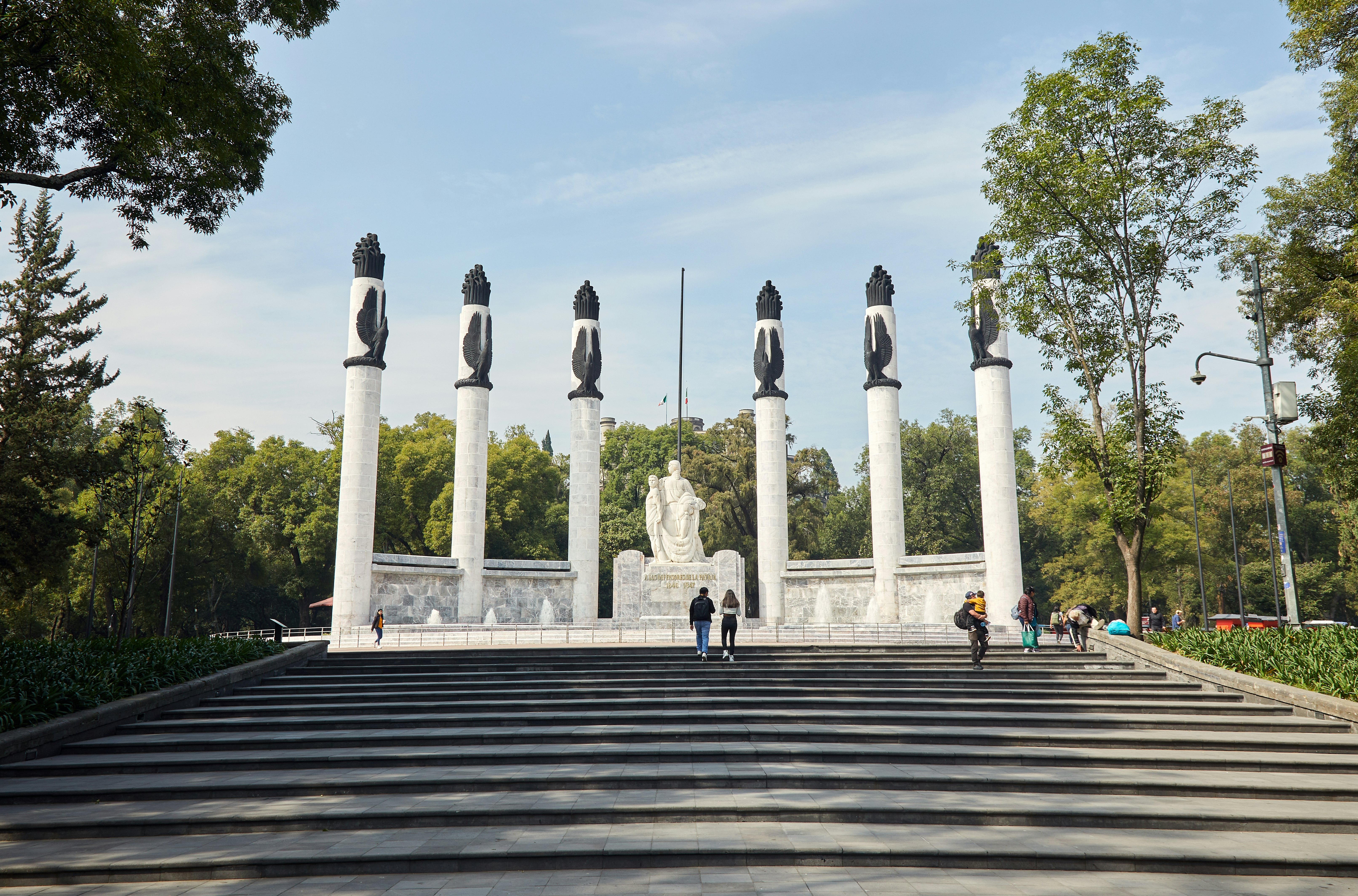
9. Castillo de Chapultepec, Mexico City
The Castillo de Chapultepec was a former military academy and the site of a pivotal 1847 battle during the Mexican–American War. Outnumbered by advancing American troops, a contingent of Mexican soldiers and cadets were ordered to retreat. Six young cadets refused to leave, fighting to their deaths. Known as the Niños Héroes (Boy Heroes), they remain celebrated symbols of Mexican patriotism. Notwithstanding this heroism, the loss at Chapultepec led to the fall of Mexico City and, ultimately, Mexico’s surrender. Under the Treaty of Guadalupe Hidalgo, Mexico ceded 55% of its territory, including much of what is today the western US.
10. Museo Histórico de la Revolución, Chihuahua
The Museo Histórico de la Revolución in Chihuahua tells the tortured story of the Mexican Revolution (1910–20), which succeeded in ending the dictatorship of Porfirio Díaz. Motivated by the profound inequities and exploitation suffered by Mexico’s masses, the revolution was led by several charismatic leaders, each with different visions for Mexico's future, prolonging the conflict. Important and lasting reforms were won, especially in land rights, but nearly one in eight Mexicans died in the war. The museum is housed in the one-time revolutionary headquarters and home of Pancho Villa, a general, guerrilla leader and folk hero.

11. Palacio Nacional, Mexico City
The grand Palacio Nacional has served as a palace and seat of government since the fall of the Aztec empire. No political party has exerted more influence in the building than the Institutional Revolutionary Party (PRI). Founded after the revolution and originally committed to genuine social equality, PRI grew steadily more insular and oppressive. It maintained an iron grip on power through a combination of economic patronage and repression of opposition voices. Despite widespread corruption and allegations of human rights abuses, PRI remained in power for nearly 70 years, losing the presidential election for the first time in 2000.

12. Instituto Cultural Hospicio Cabañas, Guadalajara
For 30 years after the revolution, the government commissioned artists to paint murals to educate the masses on Mexican history and the need for social change. Hospicio Cabañas is among the most famous locales from that era, known as the Mexican Mural Renaissance. An orphanage-turned-art-museum, its chapel was covered in 57 murals by Mexican artist José Clemente Orozco. In the murals, he channeled the archetypal struggle for freedom, depicting pre-Hispanic Jalisco and the Spanish conquest through dark, unnerving images. These and other murals around the country had a profound impact on the art world, establishing Mexico as a leader in the modernist art movement.

13. Clavadistas de la Quebrada, Acapulco
Acapulco was Mexico’s first major resort town, a favorite vacation spot for Mexicans since the 1920s. Its famous cliff divers (clavadistas) were showcased in Hollywood films and helped put Acapulco on the international map, attracting wealthy Americans in the 1950s and ‘60s. Vacation resorts began popping up in other towns along the Pacific coast, solidifying Mexico’s reputation as a prime beach destination. The rise of affordable air travel brought new waves of tourists, eventually leading to the development of Cancún and resorts on Mexico’s Caribbean coast.
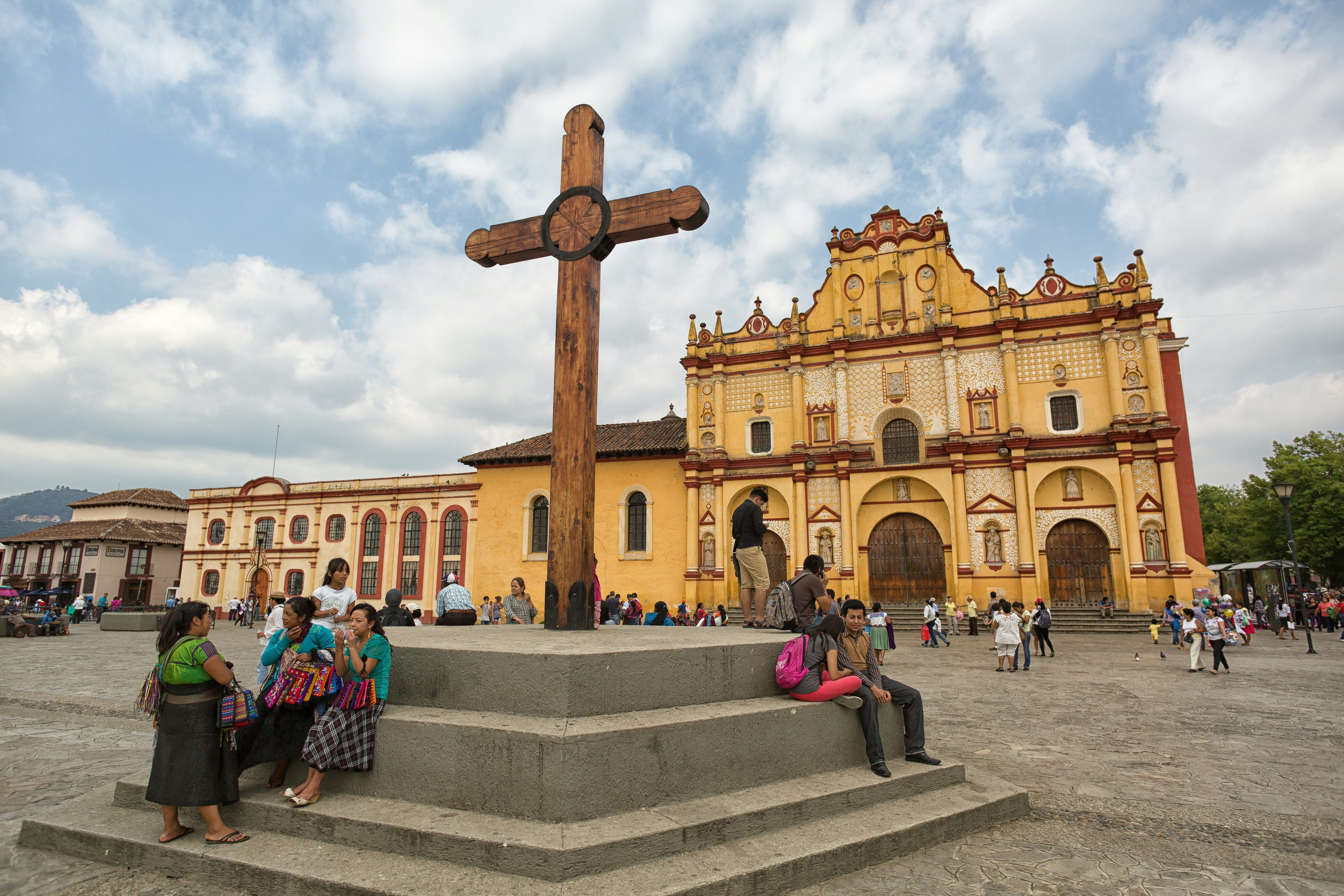
14. Plaza de la Paz, San Cristóbal
San Cristóbal de las Casas’ striking yellow cathedral opens onto Plaza de la Paz, a pleasant stone plaza that has been popular for anti-government demonstrations since 1994. That year, the Zapatista Army of National Liberation (EZLN, aka the Zapatistas), a leftist indigenous-led group, launched an uprising in Chiapas to protest the North American Free Trade Agreement (NAFTA) and long-standing threats to indigenous rights and livelihood. The uprising quickly gained international attention and support for indigenous rights; the San Andrés Peace Accords were signed 2 years later. Today, the balaclava-wearing Zapatistas remain a symbol of resistance, and peaceful protests continue in San Cristóbal and elsewhere.
15. Tren Maya, the Yucatán Peninsula
In 2018, President Andrés Manuel López Obrador (AMLO) outlined plans for a project that he hoped would create jobs and spur development, while also leaving a lasting legacy of his administration. The goal: building a passenger rail line around the Yucatán that would spread the wealth of Cancún to other parts of the peninsula. After 4 years of construction, the Tren Maya – costing some US$30 billion – was completed in late 2024 and inaugurated by AMLO’s successor, President Claudia Sheinbaum. Still largely undiscovered by many visitors, the rail line provides a memorable way to reach inland cities, seaside towns and even ancient ruins.
Advertisement
Take your Mexico trip with Lonely Planet Journeys
Time to book that trip to Mexico
Lonely Planet Journeys takes you there with fully customizable trips to top destinations – all crafted by our local experts.