Advertisement

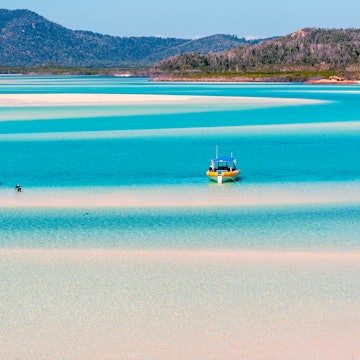
Burning Palms Beach in Royal National Park. Michael Xiaos/Shutterstock
Sensational Sydney has enough appeal to make even the most hardened visitor consider a one-way move. The surrounding parts of New South Wales brim with breathtaking natural beauty, Aboriginal and colonial history, and plenty of domestic critters to spot. In short, this city and its environs have it all.
The Blue Mountains draw walkers with epic, bush-clad vistas and prehistoric forests in hidden valleys. The Hawkesbury River region and the Royal National Park both offer spectacular walking with water views. The Central Coast stretches north with uncrowded surf beaches and inlets rich with sea birds. And the Hunter Valley is blessed with leafy country roads dotted with producers of fine wine, chocolates and cheeses.
Make the most of good roads and public transit connections to explore more of New South Wales on these top day trips from Sydney.
Advertisement

1. See Aboriginal rock art and birdlife in Ku-ring-gai Chase National Park
Travel time: 1 hour by train, 2 hours by bus.
How to travel: Take the train from Central Station to Hawkesbury River Station to explore the river by boat. Buses also run from central Sydney’s Wynyard to Mona Vale and then on to Church Point, where you can get a ferry across to the park.
The majestic Hawkesbury River flows to the ocean past honeycomb-colored cliffs and historic townships, and into quiet bays and inlets. Along its course, it passes through a series of national parks, including the spectacular Ku-ring-gai Chase National Park. Preserved since 1894, the park takes its name from its original inhabitants, the Guringai people. Remnants of precolonial Aboriginal life are visible today thanks to the preservation of more than 800 sites, including rock paintings, middens and cave art.
For information about Ku-ring-gai and walks in the area stop by the NSW National Parks & Wildlife Service information center at Bobbin Head (accessible by car). There’s also a marina, picnic areas, a cafe and a boardwalk leading through mangroves here.
Further inland, the riverside hamlet of Wisemans Ferry spills over a bow of the Hawkesbury River. It’s another perfect spot to access the Hawkesbury, and its rich ecosystem of with birdlife including kookaburras and sea eagles.
The surrounding area retains remnants of the convict-built Great North Road, originally constructed to link Sydney with the Hunter Valley and now part of UNESCO’s Australian Convict Sites World Heritage listing. As well as walks, consider booking a boat tour or hiring a kayak to get out on the river. Even better, if you have the time, do as Sydney locals do and stay longer on a houseboat.
2. Taste wine and fresh produce around the Hunter Valley
Travel time: 3 hours and 30 minutes; allow a full-day roundtrip by car or coach tour.
How to travel: If driving, take the M1 Pacific Motorway north from Sydney to Newcastle, where the Hunter Expressway will lead you into the valley.
Advertisement
While picturesque roads crisscross this verdant valley, a country drive isn’t the main reason to visit. Over 3 hours by car from Sydney, the Hunter Valley is famous as Australia’s oldest wine region, with some vines dating from the 1860s. It’s the perfect spot for anyone who appreciates fine wine, gourmet restaurants, boutique beer, chocolate, cheese, olives...you name it. It’s also a beautiful spot to go hot-air ballooning while in Australia.
You’ll probably recognize some of Australia’s biggest names in new-world wines, especially for sémillon, shiraz and chardonnay. The valley’s 150-plus wineries range from small-scale, family-run affairs to massive commercial operations – so let your nose guide you. Most offer cellar door tastings either free or for a small fee. You can get a copy of the free touring map from the Hunter Valley visitor center and use it to seek out the tucked-away small producers.
If no one’s volunteering to be the designated driver, you can book one of many guided coach tours, which range from minibuses that just do basic hop-on-hop-off transport between wineries to full-on gourmet extravaganzas, some on bicycle, horseback or in a chauffeured classic car.

3. Hike in the Blue Mountains
Travel time: 1 hour 30 minutes by car, 2 hours by train.
How to travel: Hourly trains to Katoomba take 2 hours from Sydney’s Central Station. You start your walk through the forest right from here, or catch the Blue Mountains Explorer Bus to tour the region, with options ranging from 1-hour tours to all-day hop-on-hop-off tickets to see it all.
The cool blue haze that gives the World Heritage–listed Blue Mountains their name comes from a fine mist of oil exuded by huge eucalyptus trees. The mountains are protected by eight connected conservation areas that rise as high as 1100m, with lush rainforests and epic waterfalls that can be explored on well-marked hikes of varying lengths.
Trees form a dense canopy across a landscape of deep, and sometimes inaccessible, valleys and chiseled sandstone outcrops. In fact, some valleys are so hard to reach, a species of tree once considered extinct, the Wollemi pine, was rediscovered in a valley here in 1994.
The three most popular walking areas for day trippers are the Jamison Valley, south of Katoomba, the Grose Valley, north of Blackheath, and the Wentworth Falls area. Some top choices include the Giant Stairway and the Grand Canyon Track, but check the NSW National Parks site for trail conditions and closures. Note that these ravines can be surprisingly cool throughout the year, so bring a warm layer.
These are the homelands of six Aboriginal groups – the Darug, Gundungurra, Wiradjuri, Wanaruah, Darkinjung and Tharawal – and you can gain insights into the mountains’ importance to their traditional Aboriginal custodians by taking a guided walk such as the Buuynal Tour at Scenic World. You’ll see one of the best showcases of Aboriginal rock art in the region at Red Hand Caves near Glenbook.

4. Hike and canoe in Royal National Park
Travel time: 1 hour by car, 2 hours via train and ferry.
How to travel: The easiest way to visit is by car; an entry fee of A$12 per vehicle per day applies. If you’re counting on public transport, take the train from Sydney's Central Station to Cronulla (approx 1 hour), from where Cronulla Ferries travel hourly to Bundeena (45 mins).
To Sydney’s south, Royal National Park protects 15,091 hectaresover a 32km stretch of beautiful coast. Constituted in 1879, it is also one of the world’s oldest national parks. As well as secluded beaches, sea cliffs, heathlands and forest, the park protects a cornucopia of Australian animals including wallabies, lyrebirds and raucous flocks of yellow-tailed black cockatoos.
At the junction of Kangaroo Creek and the Hacking River, Audley is home to the main visitor center and is the perfect place to pick up park maps, enjoy a picnic or hire a canoe to get out on the river. There are a number of walks to tackle in the park – especially the fabulous 26km Coast Track – but unless you’re Usain Bolt, you will only have time to complete one of the shorter marked trails on a day trip.
The park is also home to the Insta-famous Figure Eight Pools, a series of tidal pools that are indeed shaped like the number “8,” near Burning Palms Beach. Only visible and safe to visit at low tide, the pools can be reached via a 2-hour hike to the rock shelf. Check tide times and conditions before heading out, as waves can (and do!) wipe out visitors, causing major injuries.

5. Drive the Central Coast for secret beaches and forests
Travel time: Approx 2 hours; allow a full-day roundtrip by car.
How to travel: If driving, take the M1 Pacific Motorway north toward Newcastle from Sydney; the Gosford exit will take you to the road along the coast.
Running between Sydney and Newcastle, the Central Coast includes some gorgeous beaches, swathes of national park and a series of inlets and saltwater lagoons. Closer to Sydney, the southern end of the Central Coast near Ettalong can be accessed by ferry from Sydney’s Palm Beach. On the north side of the mouth of the Hawkesbury are enticing Killcare Beach, Pearl Beach and Bouddi National Park.
Beyond this point, you’ll need a car – and you’ll be glad to have one, thanks to all the epic spots for stopping off on the ride north, including the pelican-packed town of The Entrance and deep, placid Lake Macquarie. Popular beaches to take a dip along the way include Avoca or Terrigal.
Newcastle is blessed with an eclectic mix of historic architecture, as well as a much-loved beach and ocean baths. South of Newcastle Beach and below King Edward Park is Australia’s oldest ocean bath, the convict-carved Bogey Hole. It’s an atmospheric place to splash about in when the surf’s crashing over its edge. The most popular surfing breaks are at Bar Beach and Merewether Beach, two ends of the same beach a bit further south. Merewether has huge ocean baths of its own.
Advertisement