


Jan 10, 20205 min read
Sober travel: how to have a great night out in Europe’s top cities without alcohol
Széchenyi Baths, Budapest. Andrei Antipov/Shutterstock
In captivating, cultured Budapest, nothing feels more relaxing than plunging into a thermal pool and soaking away your stress and worries in warm, muscle-melting, mineral-rich waters. This is, after all, the “World’s Spa Capital.”
Landlocked Hungary is blessed by naturally heated springs bubbling up from below the ground – geology that, over thousands of years, has created a rich culture of thermal baths. And Budapest in particular is a paradise for those seeking a good soak, which can deliver relaxation, healing, uplifting design and a taste of quirky local culture.
Budapest’s bathhouses are architectural marvels and portals to the past. More than just places for wellness, they’re social hot spots – and a quintessential thing to do on any trip to Budapest. Yet it helps to know a thing or two before you check in, strip down and take the plunge.
Here’s our guide to Budapest’s thermal baths: the best bathhouses in town, what to bring, spa etiquette once you’re there and more.

Hungary is awash with thermal springs, with more than 1000 in the country and some 100 in Budapest alone. Before the Roman conquest, the area around present-day Budapest was inhabited by a Celtic tribe, the Eravisci, who named this land Ak-ink (Abundant Water).
In their regional capital of Aquincum, the ancient Romans quickly took advantage of the region’s thermal springs, as evidenced by the ruins of Roman bathhouses found within the country’s current borders. The most notable spa in Aquincum was the Thermae Maiores (Great Bath) near Flórián tér in Óbuda, which had luxuries such as hot and cold piped water and underfloor heating.
Bathing became an integral part of life in Hungary during the Ottoman occupation in the 16th and 17th centuries. The Ottomans built elegant hammam-style baths consisting of octagonal pools topped by high-domed ceilings dotted with glass inlays, allowing rays of light to shine through and strike the water. Two of these historic bathhouses – Rudas Baths and Veli Bej Baths – are still in use today.
The tradition of grand bathhouses continued after the Ottomans departed. Most of Budapest’s other historic baths, including the famous Széchenyi Baths and Gellért Baths, were built in the 19th and 20th centuries, during Budapest’s time as the second capital of the Austro-Hungarian Empire.

Many Budapest bathhouses boast about the healing properties of their waters. Bubbling up from a network of underground caves, the warm waters are rich in dissolved minerals such as calcium, hydrogen carbonate, magnesium, sodium, sulfate chlorides and metaboric acid.
In other words: a mineral bath in Budapest isn’t just about pampering. It’s also curative.
Studies have shown that bathing in mineral-rich water can help to relieve a number of health problems, ranging from arthritis and muscle pain to slipped discs, circulatory disorders, nerve pain, respiratory illnesses, orthopedic issues and even hangovers.
It isn’t just muscles and bones that benefit from all those minerals. Drinking the spa waters is said to boost your health from within – and locals swear by this. If you’d like to give this liquid treatment a go, visit the ivócsarnok (drinking halls) of Széchenyi, Lukács and Rudas Baths. All three sell potable spa water for a small price, though it’s best to bring your own bottle.


Meet your new travel partner
Get unlimited data while you travel with Holafly eSIM. Peace of mind and no hidden fees wherever you go.
Most baths operate year-round and are wonderful to visit in every season. Yet it’s during winter – when you can soak outdoors in winter and watch the steam rise into the air while snow freezes your hair – when a Budapest spa day becomes a magical experience. On weekends and during the winter holiday season, people pack into the baths like sardines; for a more peaceful experience, visit on weekdays or early in the morning.
Opening times vary by day of the week and by bathhouse, and some baths now open at night on the weekends. Most baths have decent on-site restaurants or a cafeteria, making it possible to spend a whole day there.
While you can use a self-service kiosk to buy entrance passes upon arrival, we’d recommend making an advance reservation on line to skip the queues, which can get long at peak times. The official Spas Budapest website has lots of useful, up-to-date information as you consider your schedule and options.
Kids must be 14 or older to use the thermal baths, as young cardiovascular systems can be affected by the high water temperatures. Pregnant women are also advised not to bathe in the thermal waters. For family-friendly swimming, try one of the city’s open-air, Danube-fronting lidos instead.
The Turkish bath area at Rudas holds single-sex days on weekdays (men-only at set times on Mondays, Wednesdays, Thursdays and Fridays; women-only on Tuesdays), but the baths are open to all in high season. Consult the website for specific times.
Nudity is not permitted in public areas at any thermal baths in Budapest. On single-sex days, men are given drawstring loincloths and some women wear special apron-like garments, but most people prefer to wear a swimsuit.
Most Budapest bathhouses contain a series of indoor thermal pools, whose waters range in temperature from lukewarm to piping hot, as well as colder pools for swimming laps. Other amenities include saunas, steam rooms, ice-cold plunge pools and indulgent spa services such as massages.
With the exception of Veli Bej, all of the baths named below have an outdoor section with water fountains, whirlpools and wave machines. Always specify which services you need when you enter as admission charges vary. Book ahead for additional spa treatments.
Fancy a “beer bath,” private bathing or a night-time soak? Some baths offer quirky and fun experiences – such as the Saturday night Sparty at Széchenyi – so browse their websites for special services.
Pack swimwear, a towel and flip-flops as the floor can get quite slippery. Swimming caps must be worn in the lap pools. Bathing accessories are available to rent or buy, but it’s better – and more cost-effective – to bring your own. Showers and hair dryers are available, so bring soap, shampoo and other personal products.
Upon entering a bathhouse, you’ll be given a watch-shaped electronic bracelet that serves as a key to a szekrény (locker) or kabin (cabin) – a more private but pricier changing cubicle in which you can securely leave your belongings. While some baths will assign you a number, generally you can take any one that’s available. Attendants are always around should you need any help. The outdoor pools at Széchenyi also offer smaller poolside lockers in case you want to take your wallet or phone outside. You can use a credit card or contactless payment for purchases within the baths, as well as a spa-issued payment card you can top up with forints at the cashier desk.
Take a shower before plunging into the warm waters, and tie long hair back (attendants will ask you to do so). Keep the noise to a minimum, since it can be quite echoey inside. Remember, the baths are not the same as lidos and water parks – some people are here to heal, so anything more than quiet chatting is frowned upon. Outdoor pools with waves and whirlpools are of course different; here, a more relaxed mood prevails.
Avoid soaking in the warm waters for too long since you might get light-headed. Signs by the pools specify the water temperature and may advise on how much time to spend inside – generally 20 minutes at a time. Remember to stay hydrated; drinking fountains are available at most baths. Note that eating and drinking are forbidden in the pools.
Budapest has over 100 bathhouses within its city limits. Here are our favorites.
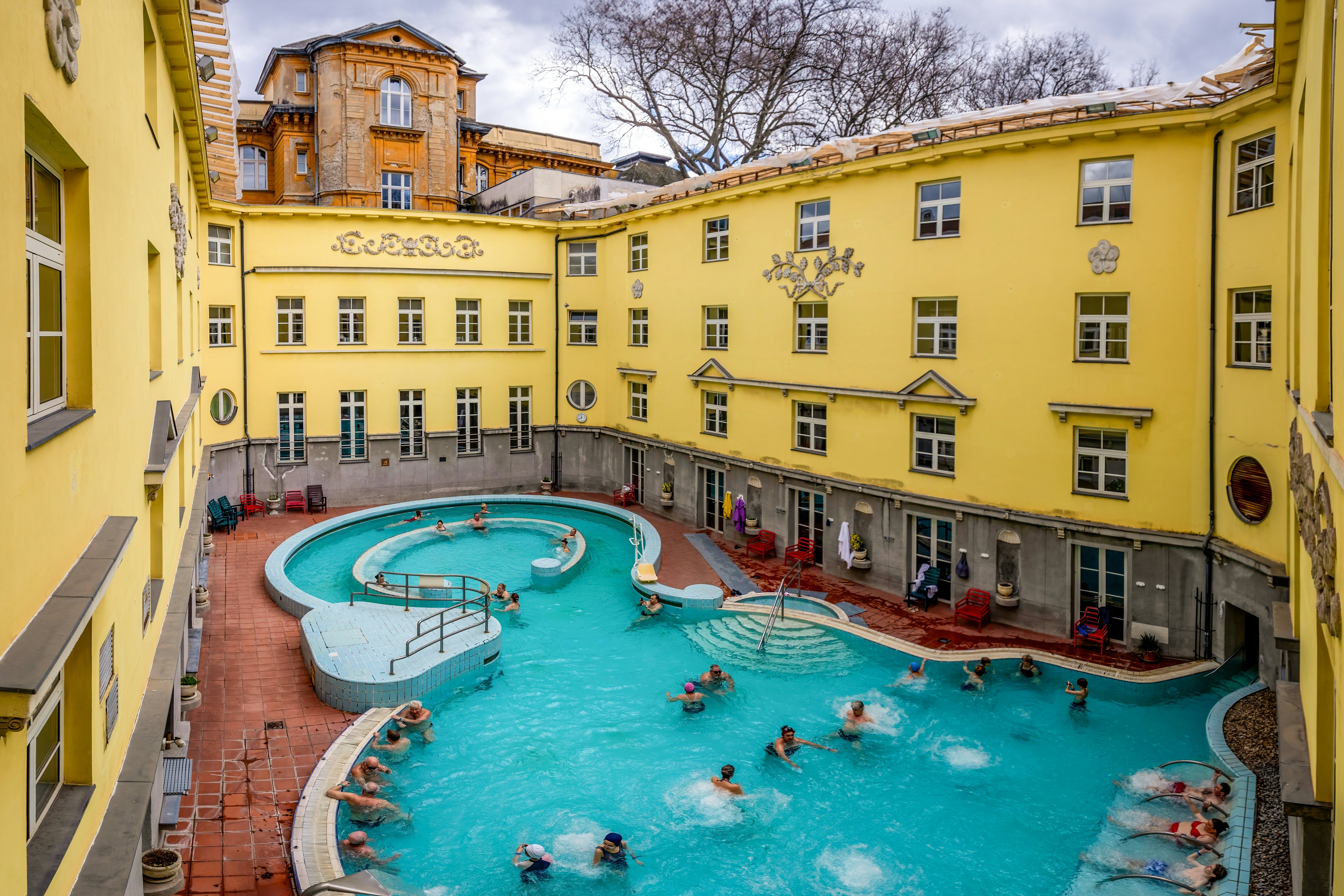
Széchenyi is one of the largest spa complexes in Europe, and probably Budapest’s most popular baths. A sunflower-yellow-painted, wedding cake-like building surrounds steaming outdoor pools, where you will take in the delightful sight of old chaps playing chess in the water. (Regulars are happy to take on new challengers, if you’re feeling brave.)
Location: City Park (Városliget).
The vibe: Grand and lively.
Selling points: Lovely outdoor pools and the beer bath section.
Open at night? No. The baths close at 7pm or 8pm in high season – but a ticketed spa party with DJ music, light shows and drinks takes place here on Saturdays.
Our tip: Come early to beat the crowds or pay a little extra to relax upstairs at the less-packed Palm House.
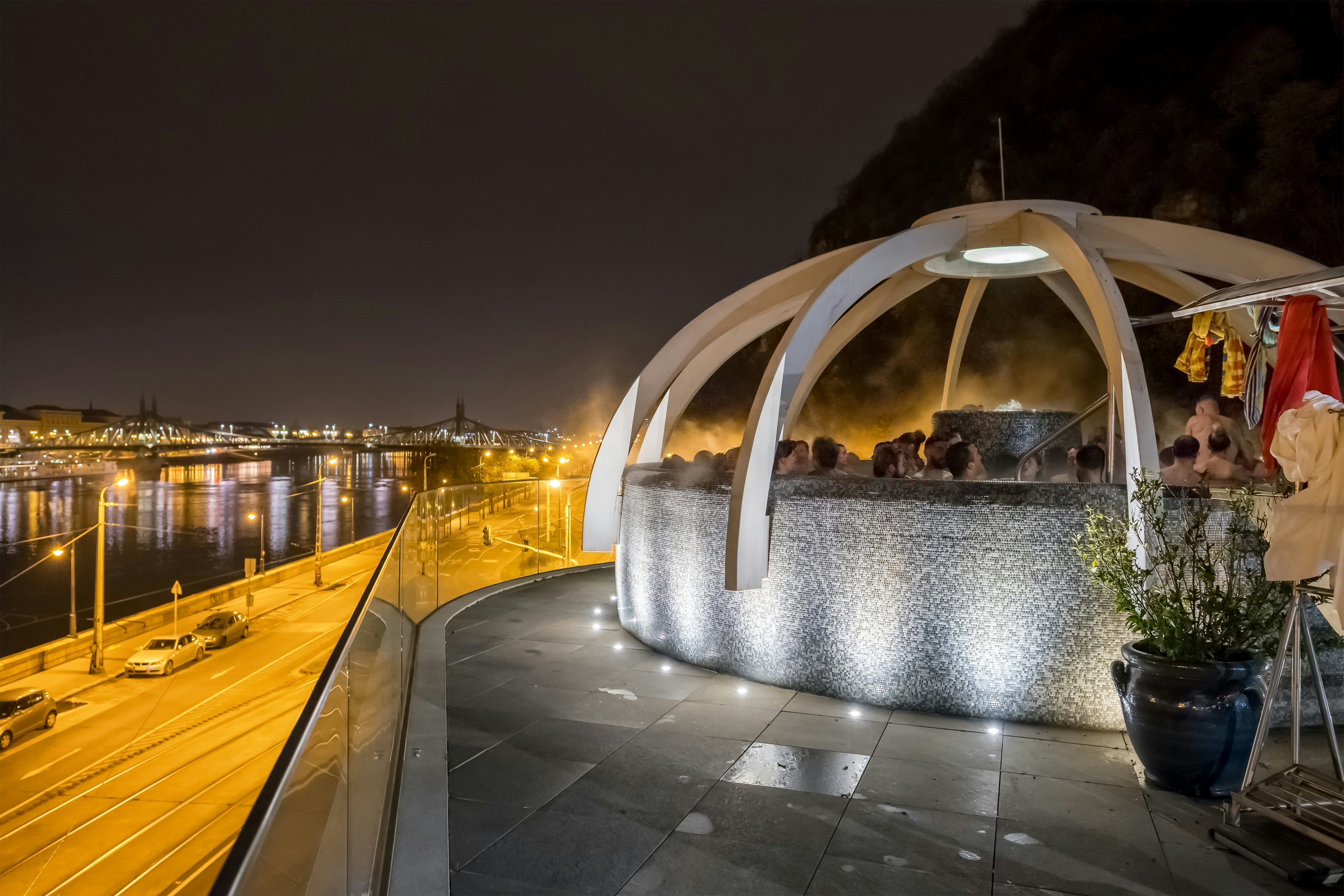
In operation since the Turks occupied Hungary, the Rudas Baths have been fully renovated with a contemporary touch. The biggest attraction is a rooftop hot tub that provides a pretty view of the Pest skyline. This is the only bath that still holds single-sex days, in its Turkish bath section.
Location: Buda side, by the foot of Elizabeth Bridge.
The vibe: Ottoman-era charm with a contemporary touch.
Selling points: The rooftop hot tub.
Open at night? Yes, on Fridays and Saturdays until 3am.
Our tip: Leave enough time to explore the various saunas, steam rooms and pools; note that the rooftop hot tub gets crowded during peak hours.
Lukács offers a peaceful escape from the city’s more crowded, tourist-heavy baths. The medicinal properties of its waters are backed up by marble memorial plaques installed in the adjacent park, giving thanks in various languages to the institution and its medical staff for healing therapies.
Location: Buda side, close to Margaret Island.
The vibe: Local and tranquil.
Selling point: A true haven of health.
Open at night? No, closes at 7pm or 8pm in high season.
Our tip: Lukács offers a “beer bath.” There’s also a drinking hall where you can taste the healing water, sourced from a dedicated well.
Less crowded than the bigger-name baths, Veli Bej is a venerable choice that combines historical charm with modern comforts. Built in the 16th century, Veli Bej was the most beautiful bath of its time. The original walls and pipes can still be seen inside the modern building, though there are no outdoor pools.
Location: Buda side, near Margaret Island.
The vibe: Quiet and intimate.
Selling points: Ottoman-era history with modern facilities.
Open at night: No, closes at 9pm.
Our tip: Check the opening hours; the bath takes a technical break between noon and 3pm, and only opens starting at 3pm on Mondays and Tuesdays.
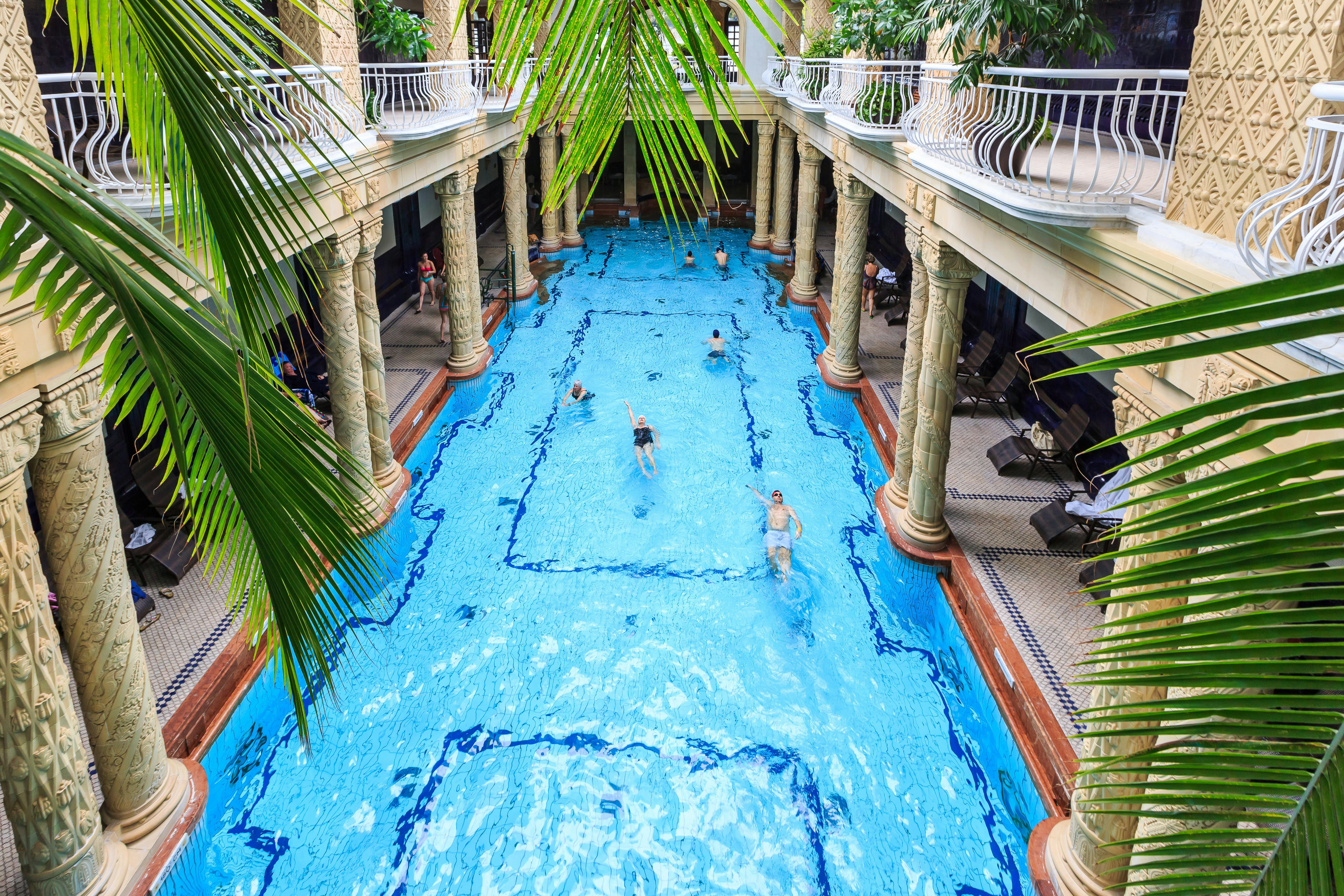
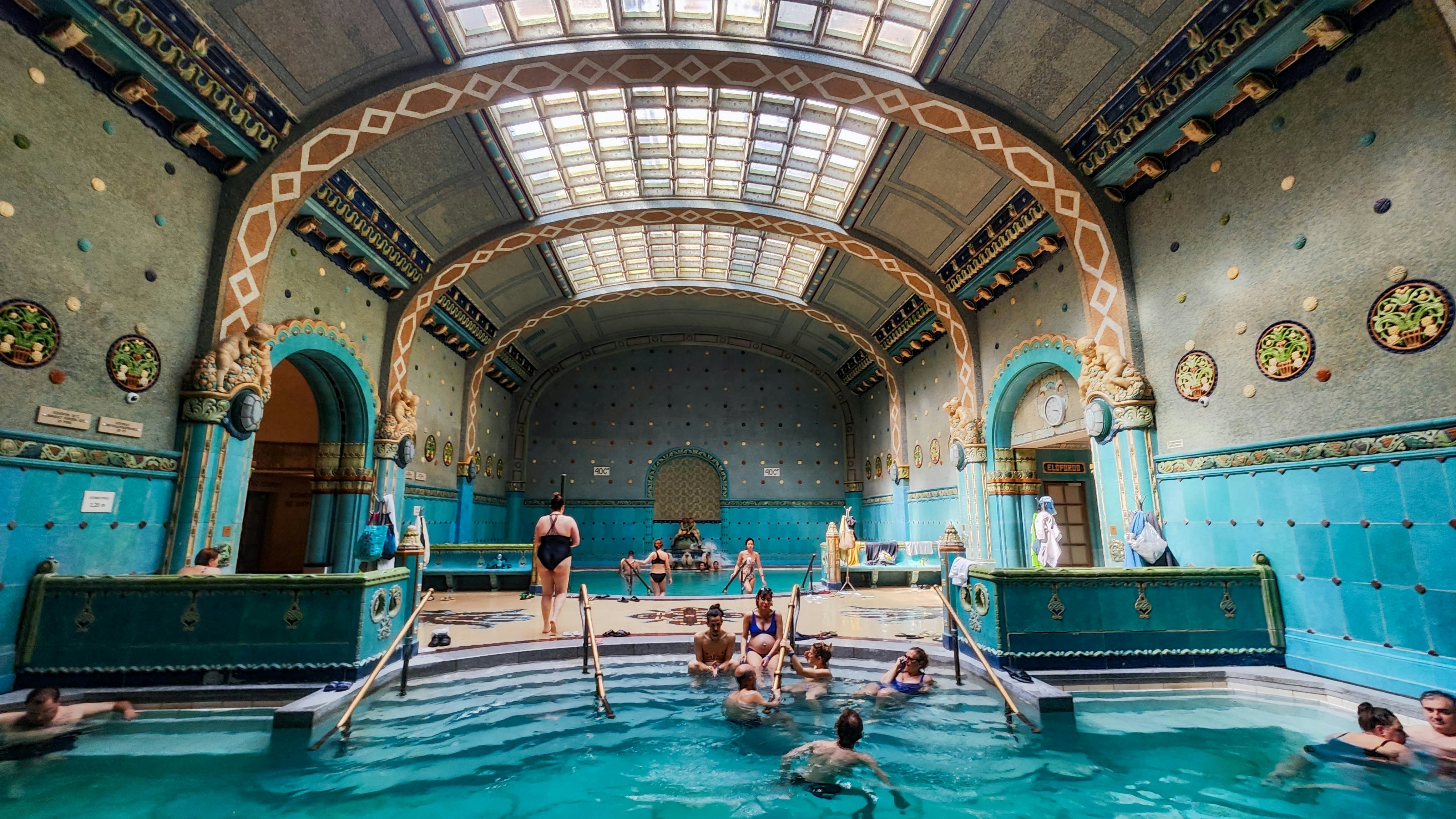
Gellért is an iconic art nouveau masterpiece. Colorful tiles and mosaics adorn the walls, while stained-glass windows and marble columns make bathing here feel like a royal ritual. The gorgeous complex closed in fall 2025 for a major renovation, with a scheduled reopening in 2028.
Location: Buda side, next to Gellért Hill.
The vibe: Elegant and historic.
Selling points: Stunning art nouveau design.
Open at night? No, closes at 7pm or 8pm in high season.
Our tip: Come early or book a private bathing session.
Jan 10, 20205 min read
Sober travel: how to have a great night out in Europe’s top cities without alcohol




Aug 23, 20258 min read
Europe in shoulder season: 11 of the best cities to see this September and October